

Designing a Sommelier-Grade Space at Home
A well-built home wine cellar is equal parts engineering and theater — a climate-controlled vault engineered to protect a collection for decades, wrapped in a design meant to be shown off at every dinner party.
Getting the Environment Right
Every credible wine storage authority agrees on the fundamentals: wine ages best at a steady temperature, generally cited in the range of 55 to 58 degrees Fahrenheit, with relative humidity maintained somewhere between 50 and 70 percent depending on the source and the collection. Consistency matters more than hitting an exact number — swings in temperature accelerate aging and can push corks to expand and contract in ways that let air infiltrate the bottle, while humidity that is too low dries corks out and humidity that is too high invites mold on labels and racking.
Because a cellar is a fundamentally different environment from the rest of the house, it needs to be engineered like one. Architects who specialize in these spaces recommend a genuine thermal envelope: a vapor barrier installed on the warm side of the insulation, typically six-mil polyethylene sheeting or closed-cell spray foam, combined with a minimum insulation value of roughly R-19 in the walls and R-30 in the ceiling. Exterior-grade doors with automatic drop-down seals and proper weather-stripping keep the space airtight, which in turn keeps the cooling system from overworking itself and failing prematurely.
Choosing a Cooling Strategy
- Through-the-wall split systems: The quietest and most energy-efficient option for small to mid-sized cellars, with the compressor located outside the tasting space.
- Ducted systems: Better suited to larger cellars or cellars integrated into a home's broader HVAC footprint.
- Self-contained units built into the cellar door or wall: A compact option for smaller rooms or converted closets and under-stair spaces.
- Passive, cave-like cellars: A traditional approach that leans on naturally cool, subterranean conditions rather than mechanical cooling, favored by some purists who prefer their wine aged the way European cellars have done it for centuries.
Design Trends Shaping 2026 Cellars
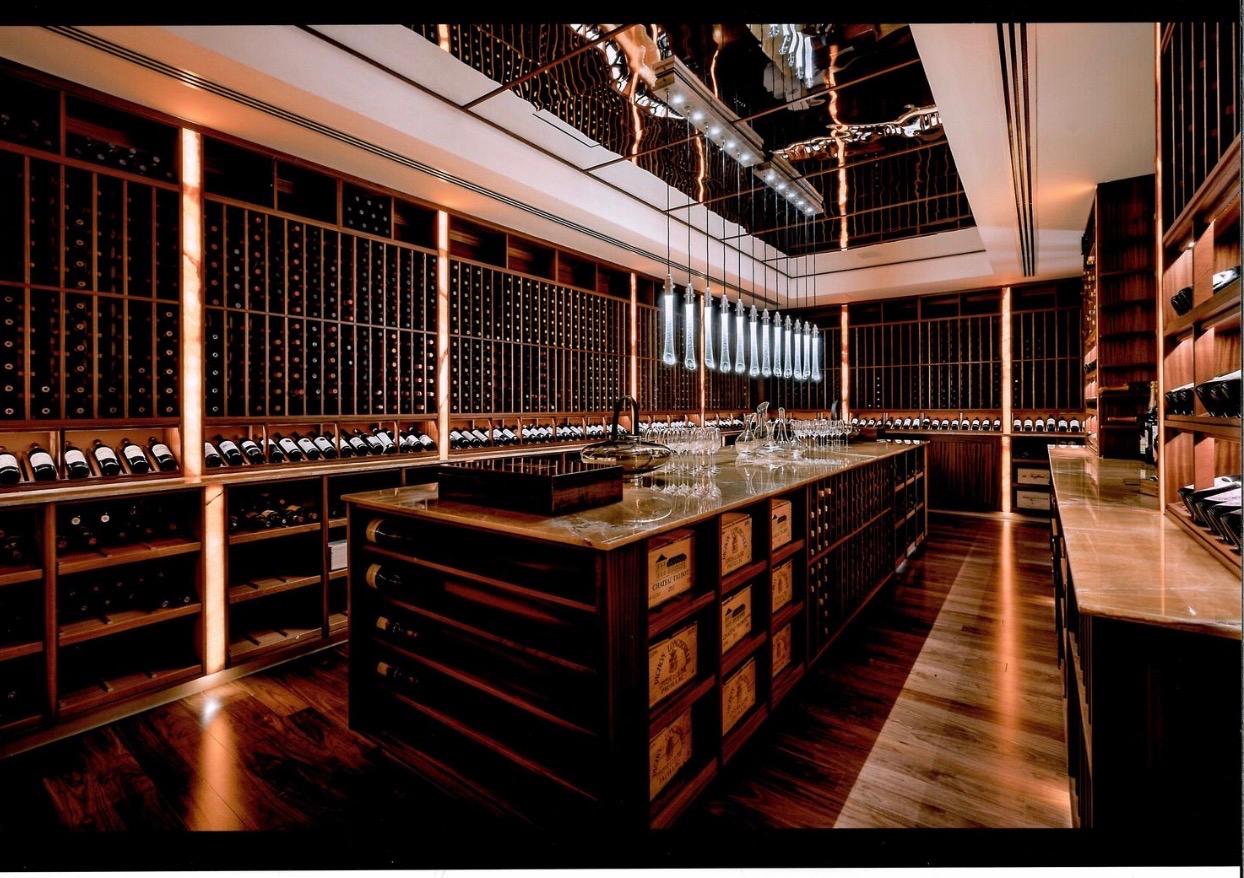
Glass-enclosed cellars continue to dominate high-end design requests, prized for the way frameless glass doors and minimalist metal racking let a collection function as a piece of art rather than something hidden in the basement. Homeowners are increasingly placing these glass rooms adjacent to kitchens, dining rooms, and entertaining areas specifically so the collection is visible during gatherings, provided the glazing is insulated and paired with a properly sized cooling system to prevent heat gain.
Beyond simple storage, many new builds now incorporate a small tasting area within or adjoining the cellar — a table, a few chairs, accent lighting, and finishes like natural stone or reclaimed wood that turn the room into a genuine experience rather than a utility closet. Smart monitoring has become close to standard as well: remote temperature and humidity tracking through a smartphone app, with instant alerts if conditions drift outside a safe range, which is particularly valuable during power outages or extreme seasonal swings. Finish choices have also become more personal, with matte black metal, brushed nickel, and powder-coated racking systems replacing the more generic wood lattice of years past.
Planning for Your Collection
Before any construction begins, it is worth thinking honestly about how the room will be used. A Cabernet-focused collector who buys in bulk may prioritize dense, uniform racking, while a collector with a broad international selection may prefer a cellar segmented by region or varietal, with feature walls reserved for rare or trophy bottles. Homeowners consistently underestimate how quickly a collection grows, so building in real expansion capacity from day one avoids an expensive renovation a few years down the line. For serious collectors, bringing in a sommelier or cellar design consultant during the planning phase can prevent costly layout mistakes and ensure the finished space actually functions the way a working cellar should.
The best home cellars work on two levels at once: a precise, monitored microclimate for the wine, and a genuine gathering space for the people who love it.
Is a Custom Cellar Worth It?
It is a fair question, and not every collector needs one. Some longtime observers of the wine world have pointed out that a full temperature- and humidity-controlled build-out is really only essential for homeowners holding a substantial cache of age-worthy bottles meant to be cellared for many years; for a rotating collection meant to be enjoyed within a year or two, a quality wine refrigerator or a cool interior closet may do the job perfectly well. For collectors who are serious about long-term aging, however — or who simply want a stunning centerpiece for entertaining — a properly engineered custom cellar remains one of the more distinctive investments a luxury home can offer, adding both daily enjoyment and a genuine point of differentiation at resale.
Check out this article next