
Population, jobs and infrastructure are reshaping Raleigh. Here's how that growth affects land, costs, design rules and long-term value for anyone planning a custom home.
Raleigh is no longer the quiet capital it was a generation ago. Cranes over downtown, new transit lanes on New Bern Avenue and fresh construction in established neighborhoods all point to the same story: steady, sustained growth. For people planning a custom home, that growth is both an opportunity and a set of challenges. Understanding it helps you buy smarter, design better and protect your investment.
Key takeaways • Wake County is adding about 66 people a day and is projected to reach roughly 1.76 million residents by 2050. • Housing supply lags demand; county planners estimate a need for 125,000–175,000 more housing units over 10–15 years. • Growth makes in-town land scarcer and pricier, pushing many luxury projects toward teardowns and infill. • The market has cooled from its peak, giving custom buyers more negotiating room on land than in recent years. |
The Growth in Numbers
Measure | Figure | Source |
Wake County daily growth | ~66 people per day | Wake County |
Wake County growth since 2020 | 103,000+ residents | Wake County |
Share of growth from migration | About 3 of every 4 new residents | Wake County |
Raleigh-Cary metro, 2020–2025 | +178,338 residents (+12.6%) | U.S. Census data via EW |
City of Raleigh, 2026 | About 500,600 residents | Central Pines / NC OSBM projection |
Wake County, 2050 projection | About 1.76 million | NC OSBM |
Wake County housing need | 125,000–175,000 units over 10–15 years | PLANWake via Wake County |
Figures as reported by each source; see list at end.
1. Land Is the New Luxury
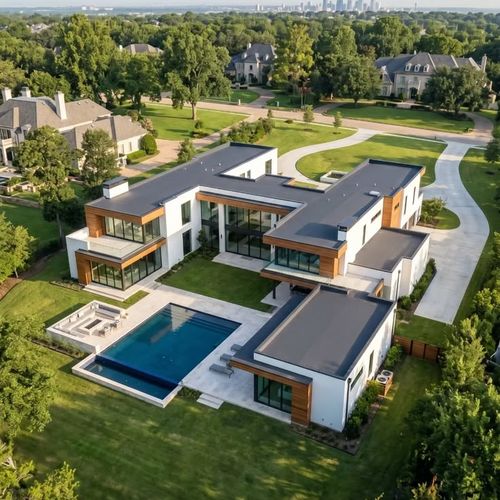
When a region grows this quickly, the scarcest resource is well-located land. Inside the Beltline and in established North Raleigh neighborhoods, vacant lots are rare, so many custom projects begin with an existing house that will be removed. Where land does come up, prices reflect demand. In ZIP code 27609, for example, TopHap data through July 2026 showed a median sale price of about $620,000, ranking it among the more expensive ZIP codes in Wake County, and that is for existing homes, not new luxury construction.
What this means for you: budget for land as a major line item, act quickly on the right lot, and have your builder evaluate teardown candidates before you make an offer.
2. A More Balanced Market Creates Opportunity
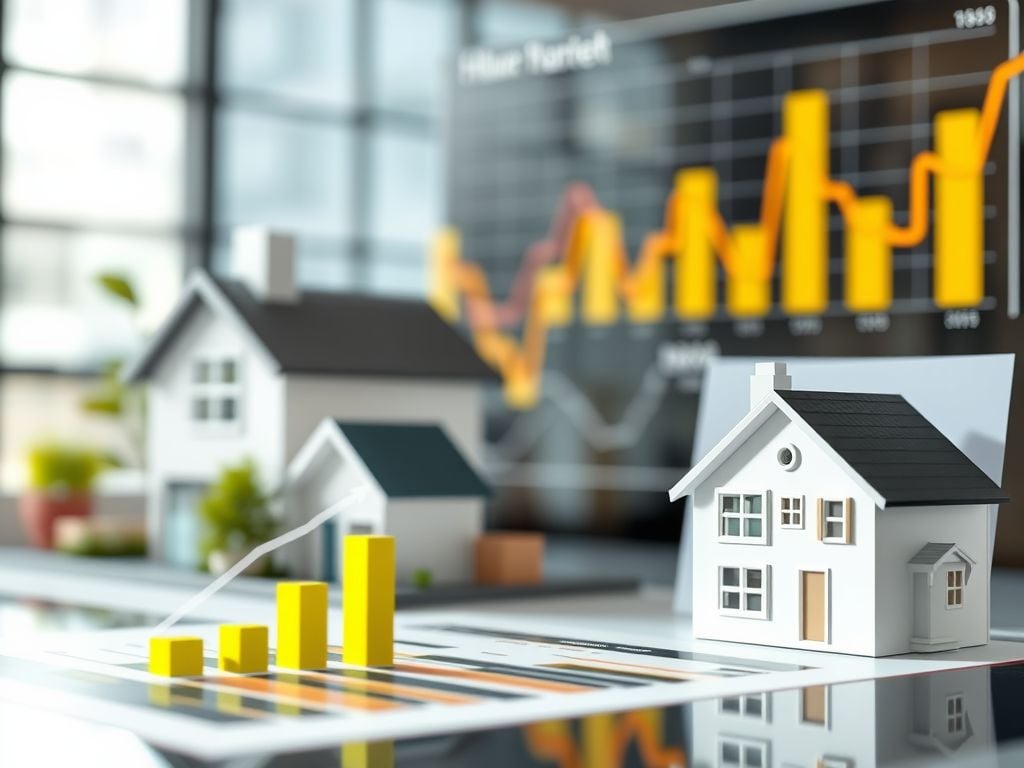
Growth doesn't mean prices only go up. After the run-up earlier this decade, Raleigh's market has cooled. ABC11, citing Redfin, reported in spring 2026 a median sale price around $420,000, slightly lower than a year earlier, with fewer homes sold and longer time on market. A mid-2026 Allen Tate market snapshot described the Triangle as trending toward buyers, with roughly one in four listings carrying a price reduction.
For custom buyers, a more balanced market can mean more choice and more negotiating room on lots and teardowns. It also rewards quality: when buyers have options, well-designed homes stand out.
3. Rules Are Evolving to Manage Growth
Raleigh has updated its Unified Development Ordinance to allow more housing options while protecting neighborhood character. For custom builders and buyers, the most relevant tools are:
- Residential infill compatibility standards that tie front setbacks and side-wall heights to nearby homes in R-4, R-6 and R-10 districts.
- Neighborhood Conservation Overlay Districts that set neighborhood-specific rules in some areas.
- Historic overlay districts, where new construction requires a Certificate of Appropriateness; the city counts eight such districts as of 2026 and is updating its historic design standards.
- Additional housing patterns such as accessory dwellings, cottage courts and flag lots, which can change what is built next door.
Expect neighbors' lots to evolve too. When evaluating a site, consider what could be built on surrounding parcels under current zoning.
4. Infrastructure Is Catching Up
Growth is bringing major public investment that can lift the value of nearby homes:
- Bus rapid transit. The Wake BRT New Bern Avenue corridor, about 5.4 miles with dedicated bus lanes, is under construction with completion scheduled by the end of 2028. Three more corridors are planned.
- The 2022 $275 million parks bond is funding Dix Park and other projects, and the greenway network spans more than 100 miles.
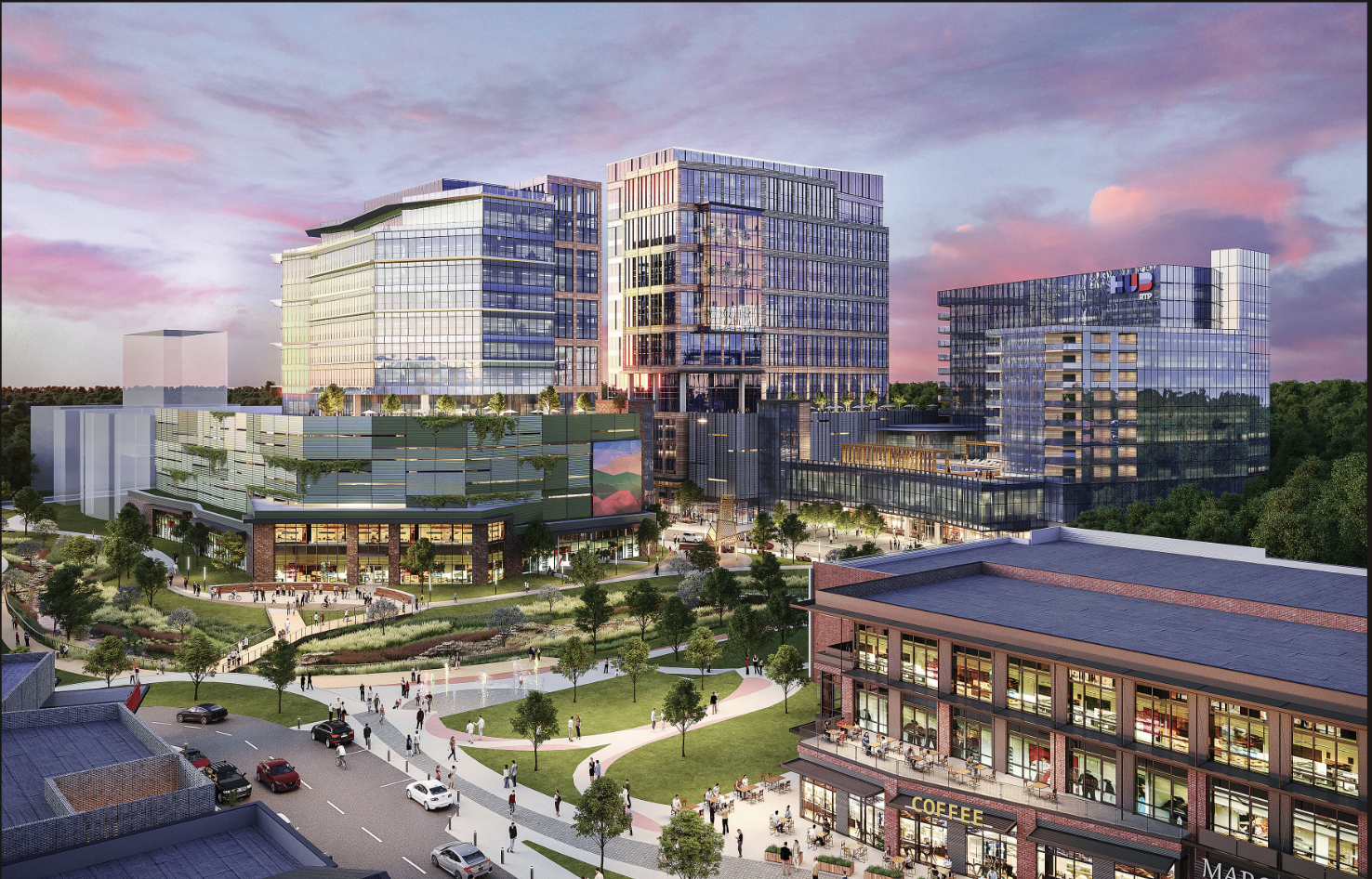
- Large projects, including a convention center expansion and a 29-story hotel, are reshaping the urban core.
5. Construction Costs and Timelines
Strong demand keeps pressure on labor and materials. Local 2026 cost guides place typical custom construction around $150 to $260 per square foot, with luxury builds in premier areas often above $400. Wake County issued 8,113 residential building permits in 2025, so skilled trades stay busy. Practical implications:
- Lock in your builder early and plan long-lead orders (windows, cabinetry, stone, appliances).
- Carry a realistic contingency for price movement.
- Take advantage of North Carolina's 15-business-day initial residential plan review requirement by submitting complete, coordinated plans.
6. Who Is Moving Here, and What They Want
Raleigh's growth is driven largely by migration, much of it professionals relocating for jobs in tech, life sciences and health care. CommercialCafe ranked Raleigh the No. 1 big city for Gen Z in 2026, and the region remains popular with families and retirees. That mix shapes demand for flexible floor plans, home offices, multigenerational suites, energy efficiency and technology, all of which custom homes can deliver.
7. Long-Term Value Outlook
Sustained population growth, a diversified economy and a structural housing shortage form a solid foundation for long-term property values. That doesn't guarantee short-term appreciation, and individual homes are still judged against nearby comparable sales. But for a well-located, well-designed custom home intended for long-term ownership, Raleigh's fundamentals are favorable.
How to Use Growth to Your Advantage
- Buy location first. Proximity to employment centers, greenways, parks and planned transit tends to hold value.
- Study what could change nearby. Check zoning on adjacent parcels and corridor plans.
- Design for flexibility. Plans that adapt to remote work, aging parents or future buyers stay relevant.
- Build quality into the envelope. Energy efficiency and durability are increasingly visible to buyers and inspectors.
Frequently Asked Questions
Will Raleigh's growth keep raising home values?
Long-term demand fundamentals are strong, but the market moves in cycles. In 2026, prices have been roughly flat to slightly lower year over year while remaining well above five years ago.
Is it harder to find a lot because of growth?
In established neighborhoods, yes. Many custom homes now start as teardowns or infill on smaller lots.
How will transit affect neighborhoods?
Areas near future BRT stations are likely to see more investment and, in some cases, more intensive development under transit-oriented rules.
The takeaway: Raleigh's growth makes land more precious and design more important. Buyers who choose location carefully, understand the rules and build for flexibility are well positioned to benefit from the region's momentum.
Sources
- Wake County — Growth and Population Trends — https://www.wake.gov/departments-government/comprehensive-planning/census-demographics/growth-and-population-trends
- NC OSBM — County population projections (Vintage 2025) — https://www.osbm.nc.gov/facts-figures/population-demographics/state-demographer/countystate-population-projections/population-summary
- Central Pines Regional Council — Regional data snapshot (Feb. 2026) — https://www.centralpinesnc.gov/sites/default/files/uploads/resources/regional-day-data-snapshot-feb-2026.pdf
- EW — Raleigh, NC: A Top Local Market to Watch in 2027 — https://www.ewweb.com/electrical-economy/market-forecasts/article/55400606/raleigh-nc-a-top-local-market-to-watch-in-2027
- ABC11 — Raleigh housing demand (Redfin data, April 2026) — https://abc11.com/amp/post/raleigh-real-estate-market-eye-turns-dix-park-area-housing-demand-remains-high/19008873/
- Allen Tate — Research Triangle market trends 2026 — https://www.allentate.com/Agent/Content/120614/research-triangle-market-trends-2026
- TopHap — Raleigh 27609 market data — https://os.tophap.com/market/27609-NC/zip/27609
- City of Raleigh — Historic Design Standards Update — https://raleighnc.gov/projects/historic-design-standards-update
- City of Raleigh — Residential Infill Development — https://raleighnc.gov/node/39711
- INDY Week — New Bern Avenue BRT construction details — https://indyweek.com/?p=281130
- City of Raleigh — Wake BRT: New Bern Avenue contract — https://raleighnc.gov/government/news/raleigh-city-council-awards-second-construction-contract-wake-brt-new-bern-avenue
- WRAL — 2022 parks bond projects — https://www.wral.com/story/21411276/
- Block Renovation — Custom Home Building in Raleigh guide — https://www.blockrenovation.com/guides/raleigh-nc-new-house-custom-build-cost-local
- NC OSFM — 15 business day residential plan review — https://ncosfm.gov/formal-interpretations/231010-nchba-ncgs-160d-1110b-15-business-day-residential-plan-review/open
- Raleigh-Wake — No. 1 City for Gen Z (CommercialCafe 2026) — https://raleigh-wake.org/ranking/1-raleigh-named-the-best-u-s-city-for-gen-z-in-2026
Figures reflect sources available as of October 2026. Zoning rules, costs and market data change; verify parcel-specific requirements with the City of Raleigh before design or purchase decisions.
Check out this article next