
A $4.7 million streetscape overhaul, a rapidly expanding population now topping 84,000, and some of the Triangle's most coveted neighborhoods are converging to make Apex real estate one of North Carolina's most compelling luxury stories.
There is a saying that has followed Apex, North Carolina for most of its 150-year history: the "Peak of Good Living." For a long time, that phrase described a quiet, charming railroad town with a walkable historic core, an honest downtown, and a community that never lost its small-town soul. Today, those words carry an additional weight — the weight of verified rankings, investment dollars, rising home values, and a downtown transformation that is already reshaping the luxury real estate market across the entire town.
Apex is no longer merely quaint. It is quaint and growing — and that combination, increasingly rare in the Research Triangle region, is exactly what is driving six- and seven-figure home sales in communities from Bella Casa to Haddon Hall to Scotts Mill. Understanding why means understanding what is actually happening on Salem Street.
A Downtown 150 Years in the Making — Now Getting Its Moment
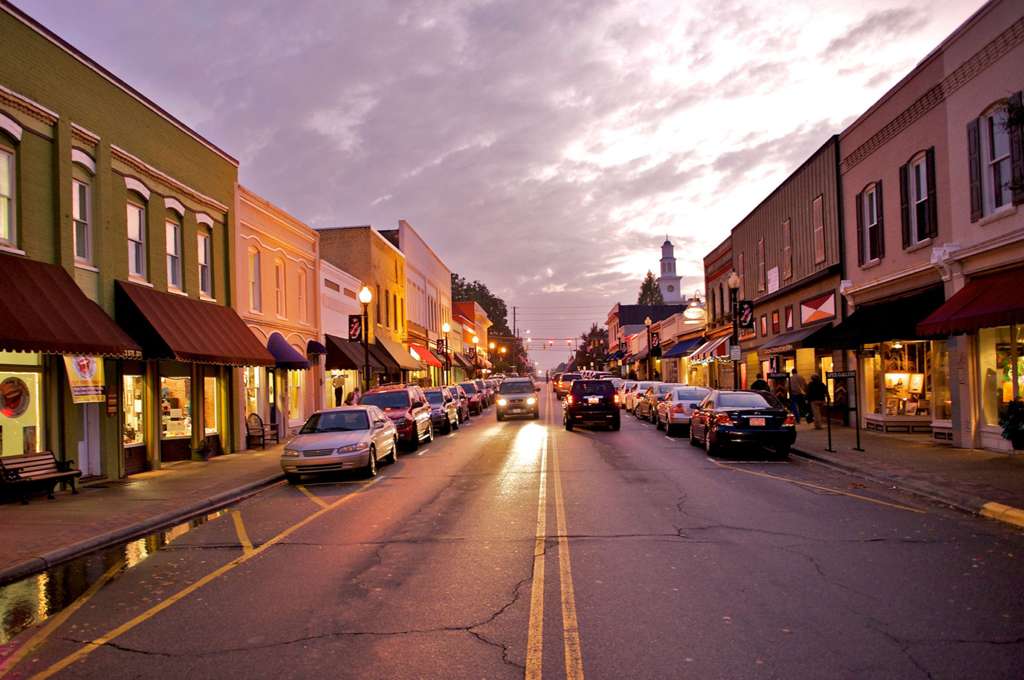
Downtown Apex is centered on North Salem Street, a stretch of historic storefronts, locally owned restaurants, boutique retailers, and converted 19th-century commercial buildings that has anchored the town's identity since its founding in 1873. The street's architecture tells the town's story: original brick facades, preserved tin ceilings, stained-glass windows, and building footprints that predate the automobile. It is the kind of downtown that new communities spend decades trying to manufacture and never quite succeed.
That authenticity has always been Apex's quiet competitive advantage. What has changed dramatically in 2025 and 2026 is the level of public investment committed to elevating that asset into a regional destination. In December 2025, the Apex Town Council voted 5-0 to award a $4.7 million construction contract — more than the original estimate but approved unanimously to prevent further inflation-driven cost increases — for the Salem Streetscape Project, the most significant physical transformation of downtown Apex in the town's history.
"We want every person — visitor, resident — to feel like they're welcome here in The Peak of Good Living." — Mayor Jacques K. Gilbert, Town of Apex
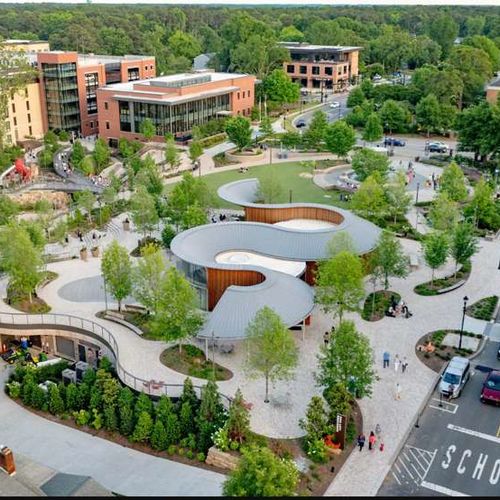
Construction began in January 2026 with a completion timeline of October 2026. The project transforms North Salem Street from West Chatham to Saunders Street into a curbless, pedestrian-priority corridor with wide paver sidewalks, new street trees planted in soil cells, upgraded lighting, outdoor seating, and improved stormwater infrastructure. Alongside the streetscape itself, the project is delivering the new Saunders Street Gathering Space — a dedicated plaza at the corner of Saunders and Commerce Street featuring pergolas, outdoor games, seating, and a digital information kiosk. The Town of Apex identified this gathering space as a Top 10 priority in its Downtown Master Plan.
The parking infrastructure to support this transformation has also been addressed. Beginning in January 2025, the town expanded the Saunders Lot by 152 spaces, bringing the downtown parking total to 392 dedicated spaces and directly responding to what the town's own planning staff identified as the single largest barrier to sustained downtown foot traffic. Additional improvements include a South Salem Street Bicycle Connection project funded at $1.06 million, a Beaver Creek Greenway Extension budgeted at $672,000, and multiple sidewalk and pedestrian facility projects connecting surrounding neighborhoods to the core.
The Numbers Behind Apex's Rise
Context matters when evaluating a local real estate market, and the context around Apex is extraordinary. The town's population stood at 84,933 as of February 28, 2026 — more than four times its population in 2000. Apex Economic Development projects that number will reach 120,000 by 2030, a growth rate that is almost without precedent for a town preserving an intact historic downtown at its center.
84,933 Population (Feb 2026) | 120,000+ Projected by 2030 | 240%+ Population Growth Since 2000 |
The recognition from national sources is extensive and consistent. WalletHub ranked Apex the third Best Small City in America in September 2025 — up from sixth in October 2024 and twelfth in October 2023, a three-year trajectory of improving position as the town's investment in quality-of-life infrastructure accelerates. The News and Observer named Apex the number one Boomtown in North Carolina in November 2024. SmartAsset ranked it the seventh Most Livable Small City in America in July 2024.
The income profile of the town has grown in parallel with its population. Per-capita income climbed 35.9 percent over the decade from 2014 to 2024, reaching an average of approximately $55,896 per person annually. The town's population grew 38 percent over the same period, from 24,910 to over 65,000 — and has continued to accelerate. The result is a buyer pool that is both large and increasingly affluent, arriving from coastal metros at a steady pace and arriving specifically because Apex offers something their origin markets do not: authentic small-town character at a fraction of the price.
The Real Estate Market: Where Luxury Meets Livability
The Apex housing market reflects this demand directly. The median home price in Apex as of May 2026 sits at approximately $650,000 — more than 80 percent above the North Carolina statewide median of $367,600. That premium is not accidental; it is the market's verdict on a combination of top-rated schools, proximity to Research Triangle Park, a genuinely walkable historic downtown, and a quality-of-life profile that consistently outperforms peer communities across the region.
At the luxury tier — homes priced above $800,000 — Apex has several distinct communities that are drawing concentrated buyer attention, each with a different profile and each benefiting from downtown's transformation in a specific way.
$650K Median Home Price (May 2026) | $795K+ Bella Casa Median | ~80% Above NC Statewide Median |
Key Luxury Neighborhoods to Know
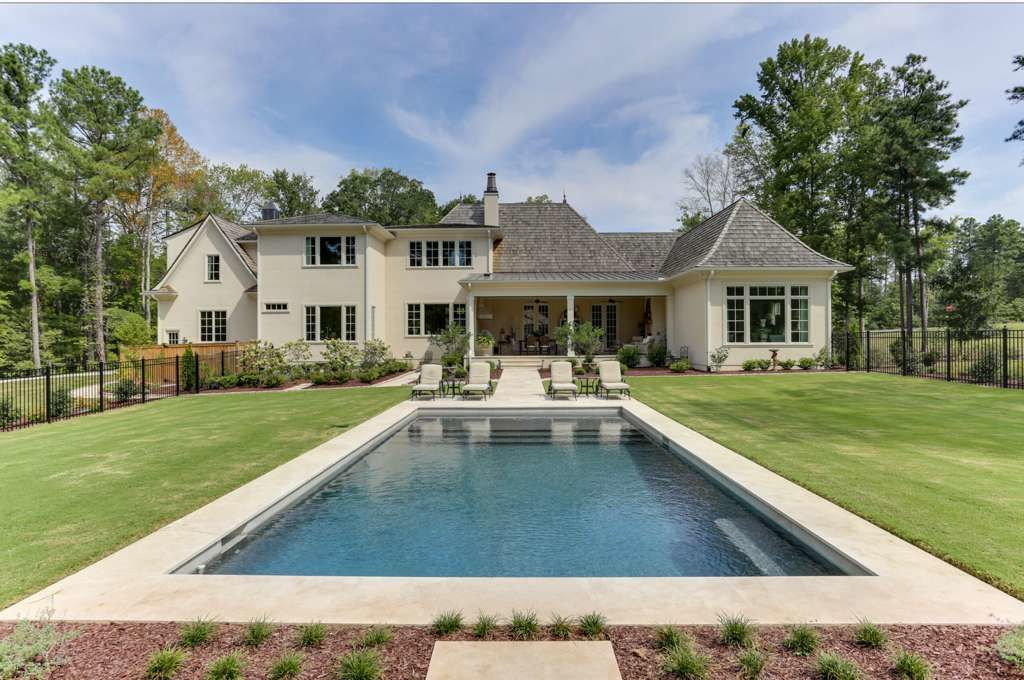
Bella Casa is consistently cited as Apex's most prestigious and sought-after residential community. Located in West Apex near Apex Barbecue Road, the master-planned community includes several phases — Bella Casa West, The Estates, and Bella Casa Townhomes — with homes ranging from the mid-$800s to over $1.3 million for estate-style properties on half-acre lots. The community's median home price sits around $795,000. Homes typically feature 2,800 to over 5,000 square feet, high-end finishes, three-car garages, and three community pools. Direct access to Apex Community Park, proximity to Apex Friendship High School, and a 20-minute drive to RTP via I-540 make this a top choice for technology and professional sector relocating families.
Haddon Hall, located 1.7 miles northwest of downtown Apex — walkable by intent — is one of the town's most established communities with approximately 800 single-family homes, townhomes, and condos. Home sizes range from 1,800 to over 5,000 square feet, with prices from the $400s to over $800,000. A community lake with walking trails, lighted tennis courts, a staffed pool, and a clubhouse give the neighborhood strong amenity infrastructure. Its proximity to both Beaver Creek Commons shopping and downtown Apex makes it uniquely positioned to benefit from both the town's commercial growth and the Salem Street streetscape investment.
Scotts Mill, situated just east of I-540 near Beaver Creek Commons, Kelly Road Park, and the Beaver Creek Greenway, offers homes ranging from $500,000 to over $1 million for larger builds up to 4,000 square feet. The neighborhood's location adjacent to major employers and recreation anchors, combined with its Apex school assignments, consistently draws buyers from Raleigh and the northern Triangle.
Additional luxury communities drawing buyer attention in 2025 and 2026 include The Villages of Apex — master-planned with live-work-play design walking distance to Salem Street — Sweetwater, with homes from $500,000 to over $1.2 million, and The Preserve at White Oak Creek, with newer luxury construction starting in the upper $600s.
The Downtown Effect: How Salem Street Moves the Market
The connection between a revitalized downtown and surrounding luxury real estate values is well documented in American real estate markets. The mechanism is straightforward: a downtown that functions as a genuine destination — with dining, retail, events, walkability, and a sense of place — creates a lifestyle narrative that commands a premium in home pricing for the surrounding market. Apex is now delivering that narrative.
Downtown Apex's anchor businesses along Salem Street create the foundation. The Peak on Salem, operating in the 1905-era building with original tin ceilings, antique hardwood floors, and exposed brick walls, represents the kind of dining experience that sophisticated buyers seek. Salem Street Pub, which draws consistent crowds and packed weekend business, demonstrates the sustained foot traffic that proves downtown's vitality is real, not seasonal. Moon & Lola, the nationally recognized accessories boutique featured on Oprah's Favorite Things, and The Rusty Bucket, operating in the former Pope's Five and Dime building, anchor a retail scene with genuine regional identity.
The town's annual community events reinforce this. PeakFest — now in its 45th year in 2026 — draws over 45,000 attendees to the town annually, making it one of the largest community festivals in western Wake County. The Peak City Pig Fest and the Apex Farmers Market further activate the downtown throughout the calendar year. These are not incidental amenities; they are quantifiable drivers of foot traffic, business revenue, and the community identity that converts house-hunters into buyers.
PeakFest, now in its 45th year, draws over 45,000 attendees annually — one of the largest community festivals in western Wake County and a testament to Apex's deeply rooted sense of place.
The streetscape investment now underway is the structural upgrade that transforms what Apex already had — authentic charm, historic buildings, locally owned businesses — into a fully activated, pedestrian-first destination. The new Saunders Gathering Space, pergolas, outdoor games, digital kiosk, and curbless street design signal that downtown Apex is not simply preserving itself but actively investing in its future. That signal matters to luxury buyers, who are making not just a lifestyle decision but a long-term investment decision when they choose Apex.
What Schools, Infrastructure & Employers Add to the Picture
No account of Apex's luxury real estate market is complete without its schools. Apex is served by the Wake County Public School System, home to 12 public schools averaging an 8 out of 10 GreatSchools rating. Apex High School, Apex Friendship High School, Olive Chapel Elementary, and Scotts Mill Elementary are among the consistently high-performing campuses in the system. For the relocating family — typically the core luxury buyer profile in Apex — school quality is a non-negotiable filter, and Apex passes it at every level.
On infrastructure, the town's capital investment pipeline is substantial. The FY2025-26 budget added 31.25 new positions across 15 departments, increased competitive base salaries, and continued strategic upgrades to roads, utilities, and public facilities. The Wimberly Road Park project will develop nearly 50 acres with a 70,000-plus square foot recreation center, gymnasium, trails, adaptive athletic fields, and community gardens — adding to a parks and recreation infrastructure that already includes Kelly Road Park, Apex Community Park, Jaycee Park, and more than 30 miles of greenway trails within the town limits.
For employment, the proximity to Research Triangle Park — one of the largest research and technology employment centers in the world — puts Apex buyers within a 20-to-25 minute commute of major employers including SAS Institute, Cisco, IBM, Biogen, and numerous pharmaceutical and technology firms. The broader Research Triangle region, now home to more than 2 million residents, provides a deep and diversified employment base that insulates Apex's housing market from single-sector exposure.
What Buyers and Sellers Should Know Now
For buyers and sellers engaging Apex's luxury market in 2026, several dynamics are worth anchoring your strategy around:
- Inventory is structurally tight. Apex carries less housing supply than comparable Wake County communities, a function of its strong school assignments and the strong hold that established homeowners have on desirable neighborhoods. Well-prepared luxury homes attract immediate, competitive interest.
- The downtown investment timeline is still early. The Salem Streetscape project runs through October 2026, and the Saunders Gathering Space and alley improvements follow in 2027. Buyers entering now are purchasing ahead of the full delivery of these improvements — historically the strongest value position in markets where civic investment is verified and funded.
- Proximity to downtown carries a measurable premium. Homes in walkable-to-downtown communities like The Villages of Apex and those within the Haddon Hall corridor command pricing that reflects their accessibility to Salem Street. As the streetscape investment matures, that premium is expected to widen.
- Relocation demand from coastal metros remains strong. The population growth projecting Apex to 120,000 by 2030 is driven significantly by inbound migration from the Northeast and West Coast, where buyers arrive with equity and purchasing power calibrated to markets where $650,000 buys a fraction of what it does in Apex.
- The town's fiscal posture is strong. With a unanimous council vote committing $4.7 million to downtown infrastructure and a municipal budget that has consistently expanded services and capital investment for years, Apex is a town making long-term commitments to its quality of life — the kind of institutional stability that protects real estate values.
The Bigger Picture: A Small Town That Scaled Without Losing Its Soul
What makes Apex genuinely unusual in the North Carolina market is not any single data point — not the population growth rate, not the WalletHub ranking, not the streetscape budget, not the luxury home prices. It is the fact that all of those things are happening simultaneously in a town that has not traded its identity to achieve them.
Salem Street still has the original brick facades. The annual festivals still draw tens of thousands of neighbors rather than strangers. The mayor is quoted not about development metrics but about making every visitor feel welcome in the Peak of Good Living. That combination — authentic character plus verified investment plus sustained growth — is the rarest and most durable foundation for luxury real estate appreciation. It is what separates markets that spike from markets that compound.
Apex is compounding. The downtown investment now underway is not creating Apex's story — it is amplifying one that has been building for 150 years. For buyers considering the Triangle's luxury market, and for sellers positioned within it, that distinction matters more than any single quarter's median price data. The quaint and the growing are, in Apex, not in tension. They are the same thing.
Sources: Town of Apex Official Website (apexnc.org) · Apex Economic Development · WRAL News · The Assembly NC · 5 West Magazine · Redfin · Movoto · Raleigh Realty · Neilsberg · WalletHub 2025 · News & Observer November 2024 · SmartAsset July 2024 · CBS17 · PeakFest.org
Check out this article next