
A revitalized downtown core, a $68M destination park, and a surge of nationally recognized mixed-use investment are reshaping West Cary's luxury real estate story — and the numbers are starting to show it.
Something remarkable is happening in Cary, North Carolina — and it is not confined to a single neighborhood or a single development. A confluence of forces, anchored by the transformation of downtown Cary into a nationally recognized destination, is rippling outward across the town and landing squarely in the luxury enclaves of West Cary. For buyers, sellers, and developers watching this market, the signals are unmistakable.
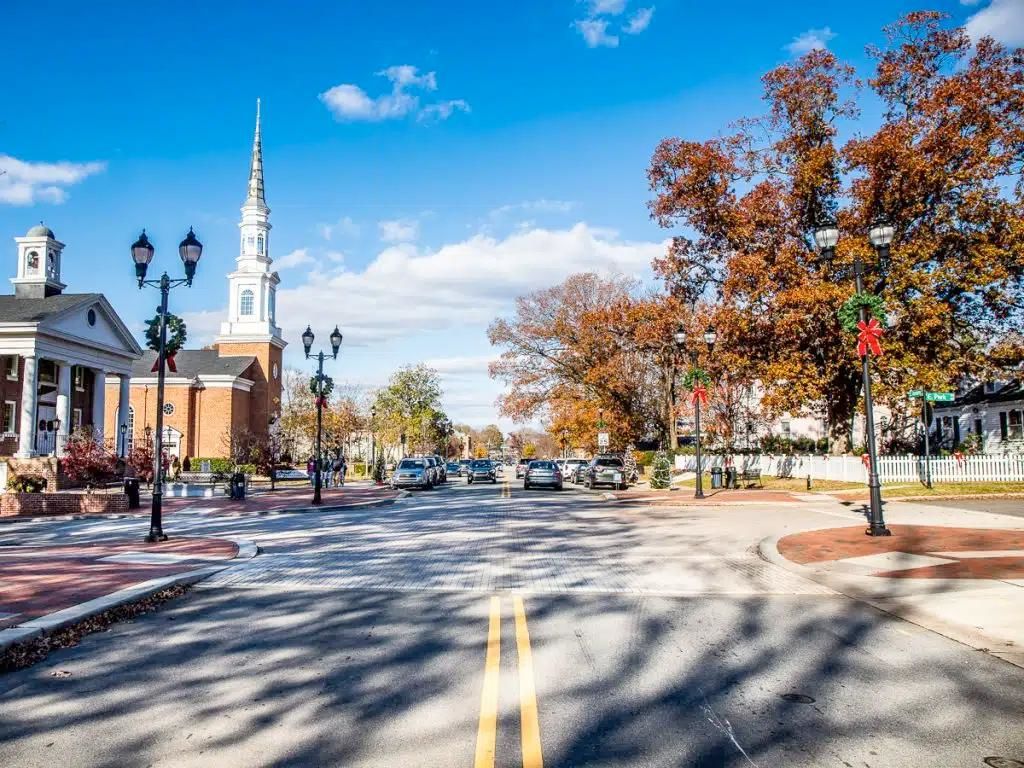
Cary has long been celebrated for its quality of life, its top-rated schools, and its proximity to Research Triangle Park. But for years, its downtown was a quiet footnote — the kind of place that, as the town's own longtime observers note, 'rolled up the sidewalks at five o'clock.' That era is definitively over. The downtown that is emerging today is a programmed, activated, walkable destination. And it is making the already prestigious addresses of West Cary even more desirable.
Downtown Cary's $68 Million Transformation
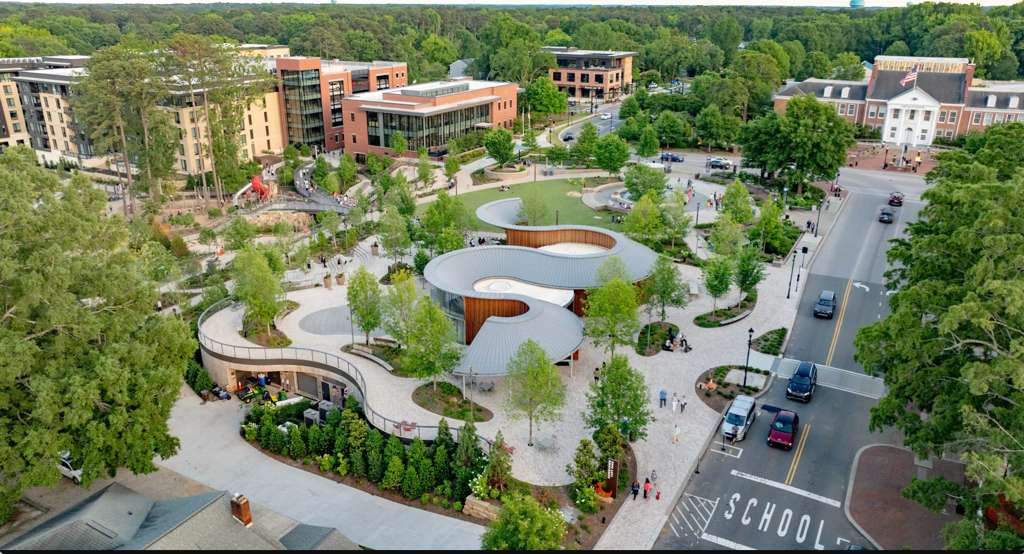
The story starts with a park. In November 2023, Cary opened the Downtown Cary Park — a seven-acre, $68 million green space positioned at the heart of the urban core alongside the downtown library and The Mayton hotel. The investment was bold, the result of roughly two decades of community debate and planning. The result has been transformative. The park is now projected to generate an annual economic impact of $16 million for the surrounding area, driving job growth, pushing up property values, and anchoring the growth of both new and established businesses downtown.
The recognition has been national in scope. USA Today's 10Best Readers' Choice Awards named Downtown Cary Park the number one public playground in America. Fast Company honored it in its 2025 Innovation by Design Awards. Tourism and lifestyle writers from across the country have covered the park as a regional destination since 2024, translating what was once a 'soft' amenity claim into a documented pattern of sustained foot traffic and economic spend — the kind of evidence that sophisticated buyers and investors actually weigh.
"Downtown Cary Park is projected to generate a $16 million annual economic impact — driving job growth, lifting property values, and confirming the downtown core as a genuine regional destination."
Visitors are coming. The park's programming — concerts, seasonal festivals, weekend markets — keeps footfall consistently high, and that foot traffic is doing exactly what urban planners predicted: anchoring the growth of restaurants, retail, and Class A office space in the blocks surrounding it. The Rogers on Chatham Street, a mixed-use development that received its first certificate of occupancy in the summer of 2024, now houses tenants including Villa 19, Zest Restaurant, The Milkshake Factory, and WithersRavenel. Two new parking decks — Cedar Street and Academy Street — are scheduled to open in Spring 2026, a signal that the Town of Cary is investing in the infrastructure to sustain downtown's momentum at scale.
The Development Pipeline Is Accelerating
If the park was the catalyst, the development pipeline is the proof that downtown Cary's rise is structural, not cyclical. Across the core and its adjacent corridors, a series of significant projects are at various stages of planning and construction — and each new announcement draws more attention to the neighborhoods that surround them.
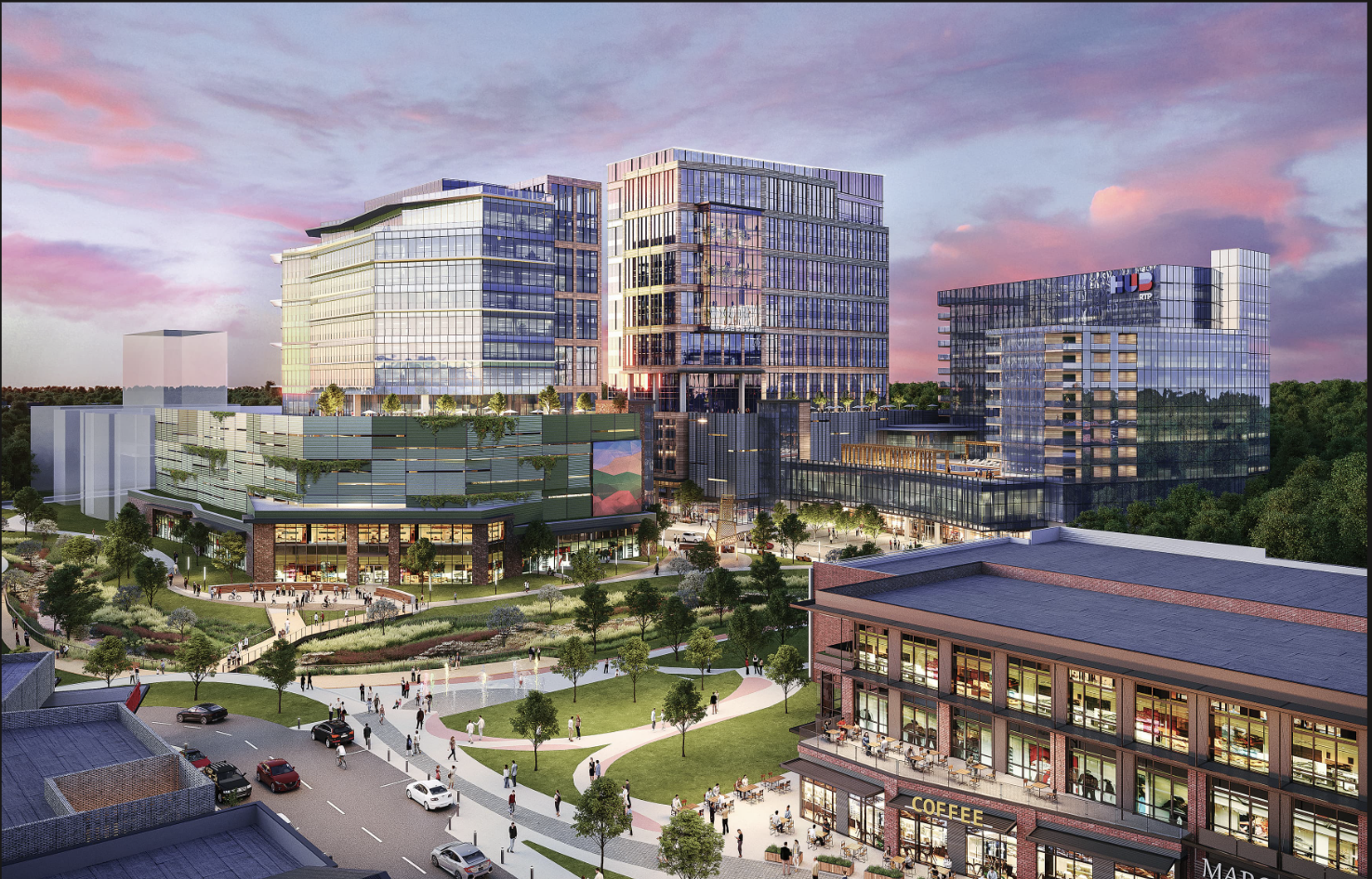
Among the most notable recent additions: Kane Realty Corporation, the Triangle developer behind Raleigh's celebrated North Hills and Smoky Hollow districts, announced in May 2026 its first residential projects in Cary. The firm's Flatiron proposal — a seven-story mixed-use building at 602 West Chatham Street with 213 apartments, restaurant and retail space, a rooftop amenity deck, and a resort-style pool — is proposed for a site just steps from the downtown roundabout. A second project, 7001 Weston, proposes converting a legacy office corridor on Weston Parkway into 275 residential units. In announcing the projects, Kane Realty's chief executive described downtown Cary as 'transforming just as quickly' as the town itself is growing, citing an opportunity to create 'long-term value for the community.'
Separately, Bost Custom Homes broke ground in 2025 on an 11,035-square-foot, three-story mixed-use building at 305 Bowden Street — the firm's first venture into non-residential development, a sign of how confident builders are becoming in downtown Cary's trajectory. The Northwoods Jordan Mixed-Use development, proposing a 195-unit multifamily building, 80,000 square feet of Class A office space, and a parking deck on a 4.5-acre site along South Harrison Avenue, adds further density to the core.
At the civic level, the Town of Cary has issued a request for qualifications to redevelop 28 acres of town-owned land encompassing the Town Hall campus into a mixed-use district encompassing office, housing, retail, transit, and entertainment. Eighteen developers submitted applications. Whatever emerges from that process will represent the single largest planned intensification in downtown Cary's history.
What This Means for West Cary's Luxury Market
West Cary has always attracted a particular kind of buyer: the executive relocating from the Northeast or West Coast, the tech professional at SAS or Epic Games or a Research Triangle Park employer, the growing family prioritizing schools and community. What has historically sold West Cary is its neighborhoods — and those neighborhoods remain among the most distinguished in the Triangle.
Preston, centered on the 1,950-acre Prestonwood Country Club campus developed in the 1990s and anchored by Prestonwood Country Club with 54 holes of championship golf, offers homes from approximately $500,000 to over $3 million, with an average value around $1 million. Located five miles northwest of downtown Cary with convenient access to RTP and the airport, Preston's appeal to executives and top-tier professionals has been consistent for decades. MacGregor Downs, one of only a handful of Cary communities offering genuine lakefront positioning along MacGregor Lake, commands prices ranging from roughly $600,000 to $5.3 million and ranks among the top fifteen percent of highest-income neighborhoods in America. Lochmere, Regency, Amberly, and Carpenter Village round out a west-side lineup that gives buyers a range of luxury tiers, architectural styles, and community amenities.
What downtown's transformation adds to this equation is something these neighborhoods could not previously offer: a vibrant, walkable urban core within a short drive — one with national-caliber parks, restaurant culture, Class A office space, and a growing arts and events scene. For the buyer who has spent years in a truly urban environment before relocating to the Triangle, that matters enormously. It answers the question that West Cary's luxury market previously had to sidestep: 'Yes, the neighborhood is exceptional — but what do you do on a Saturday night?'
Real estate analysts tracking the Cary market have noted this shift explicitly. Luxury in Cary 'leans heavily on legacy golf and greenway enclaves' in the west, and the amenity halo of both Downtown Cary Park and the Fenton mixed-use district — for buyers who want short commutes to dining and culture — is increasingly being capitalized into price premiums. Properties marketed with quantified proximity to these anchors are commanding a demonstrable lift over comparable inventory without that narrative.
By the Numbers: Cary's Market Position
The macro figures confirm what neighborhood-level observation suggests. Cary is now ranked the number five Best Place to Live in the United States and number one in North Carolina by U.S. News & World Report for 2025-2026 — the most prominent ranking of its kind. The median household income in Cary stands at approximately $135,132, up nearly 28 percent from 2019 to 2024, a rate of growth that significantly outpaces the prior five-year period. Roughly 68.5 percent of Cary residents are homeowners.
The median home value in Cary sits at approximately $649,000 per the Town's own 2026 State of Cary report — nearly 47 percent above the national median, reflecting the town's sustained premium positioning. Housing costs in Cary are 23 percent above the national average. At the same time, Cary maintains the lowest property tax rate among all twelve municipalities in Wake County — 34 cents per $100 of assessed value — for the eighteenth consecutive year. That combination of high quality of life, low tax burden, and rising incomes creates a powerful structural case for sustained luxury demand.
The town's unemployment rate, at 2.9 percent as of mid-2025, sits well below the national rate of 4.2 percent. Cary is home to major anchoring employers including SAS Institute (approximately 4,000 local employees), Epic Games (approximately 2,000 local employees), WakeMed Cary Hospital, Siemens, MetLife, ABB, and American Airlines, with Research Triangle Park accessible in minutes from West Cary's key communities.
Cary's population has grown to more than 190,000 residents, and the broader Research Triangle region — which includes Raleigh, Durham, and Chapel Hill — now encompasses more than 2 million people, consistently ranking as one of the top regions in the country for quality of life, economic opportunity, and housing investment. Inbound migration to Cary has drawn particularly from Washington, D.C., New York, and Fayetteville, with buyers increasingly arriving with high-dollar budgets shaped by the markets they are leaving.
The Spillover Effect: How Downtown Energy Moves West
The mechanism connecting downtown Cary's rise to West Cary luxury sales is not complicated — it is the same dynamic observed in virtually every American city where a downtown has successfully revitalized in proximity to established upscale suburbs. As downtown becomes a genuine destination, the halo of desirability expands outward. Buyers who might have chosen a competing market — Chapel Hill, North Raleigh, North Durham — now see Cary differently. They see a town with not just excellent schools and safe streets and mature green space, but a downtown that actually functions as a cultural and social anchor.
That recalibration is particularly powerful for the buyer profile that West Cary's luxury communities are built for. The technology executive relocating from Seattle or San Francisco brings expectations that were previously difficult to satisfy in a suburb — expectations for walkable dining, public gathering spaces, programmed events, and an identifiable sense of place. Downtown Cary Park, Fenton, the growing restaurant scene on Chatham Street, and the arrival of firms like Kane Realty signal that Cary is no longer asking that buyer to make a compromise. It is presenting itself as the full package.
Real estate professionals in the market have increasingly noted the shift in buyer conversations. West Cary's proximity to the downtown core — typically a five-to-fifteen minute drive from Preston, MacGregor Downs, Lochmere, and Amberly — is now a selling point that buyers are raising, not just agents. The greenway network, more than 85 miles throughout the town, adds a physical dimension to the connection: residents can ride or walk toward downtown Cary along trail corridors that link neighborhoods to the park and beyond.
What Buyers and Sellers Should Know Now
For buyers considering West Cary's luxury market, the current moment represents a compelling entry point before the full weight of downtown's investment cycle is reflected in comps. Several dynamics are worth understanding:
- Inventory remains tight. Cary has largely exhausted its developable land for traditional subdivisions, which means new supply is coming primarily through infill, mixed-use, and vertical construction — not the large-format single-family releases that historically moderated prices. The luxury tier, particularly at waterfront and golf course properties, is constrained by genuine scarcity.
- The luxury neighborhoods of West Cary — Preston, MacGregor Downs, Lochmere, Regency, and Amberly — have distinct structural advantages tied to scarcity, prestige, amenity concentration, and employment proximity. Marketing that quantifies drive times to Downtown Cary Park, Fenton, and RTP is increasingly proving its value in closing the gap between listing price and buyer hesitation.
- Relocation demand from Washington, New York, and major coastal metros continues to drive above-median purchase activity. These buyers arrive with acute awareness of urban amenity value and often respond positively to Cary's combination of neighborhood quality and the emerging downtown story.
- The Town of Cary's development pipeline, from the 28-acre Town Hall campus RFQ to Kane Realty's Flatiron proposal to the opening of two major parking structures in Spring 2026, signals that downtown is not at a peak but in a sustained growth phase. Real estate that benefits from downtown's trajectory today should appreciate further as each new phase delivers.
For sellers in West Cary's luxury tier, the strategic implication is to lead with the full lifestyle narrative — not just the home. The story is no longer purely about lot size, school district, and golf course membership. It is about proximity to a nationally recognized downtown transformation, membership in a town that has ranked number one in North Carolina for quality of life, and access to an expanding amenity ecosystem that continues to attract the highest-earning households in the region.
The Bigger Picture
When the history of Cary's real estate market in the 2020s is written, downtown's renaissance will occupy a central chapter. The $68 million park, the influx of nationally recognized developers, the 28-acre civic redevelopment opportunity, the arrival of Kane Realty, the dual parking structures opening in spring 2026 — these are not isolated events. They are a coordinated, sustained investment in the kind of urban core that makes a whole town more valuable.
West Cary's luxury market has always had the fundamentals: elite neighborhoods, top employers, exceptional schools, and the quality of life infrastructure that makes Cary the best place to live in North Carolina. What downtown Cary's meteoric rise is providing is the final piece — the cultural and social anchor that completes the story for the most discerning, highest-spending buyers in the Triangle. In a competitive regional market, that completion matters. And the numbers, as they are already beginning to reflect, will increasingly confirm it.
Sources: Town of Cary 2026 State of Cary Report • Redfin Market Data (2026) • U.S. News & World Report 2025–2026 Rankings • WRAL News • Triangle Business Journal • Business North Carolina • Living in Raleigh Now • Raleigh Realty
Check out this article next