
Breaking Down the Dundon–Lasry–State Ownership Trio and the Triangle's Case for America's Pastime
On June 8, 2026, WRAL broke a story that changed the tenor of the conversation around Major League Baseball in North Carolina. Billionaire investor Marc Lasry — former co-owner of the Milwaukee Bucks during their 2021 championship season — stepped forward to express his desire to invest in an MLB franchise for Raleigh, and his willingness to partner with Carolina Hurricanes owner Tom Dundon. Combined with the North Carolina State Treasurer's recent public commentary about the state pension fund's interest in major sports investments, a picture is emerging of the most serious and credible MLB ownership group Raleigh has ever assembled.
The question is no longer whether Raleigh deserves an MLB team. The market data has settled that debate convincingly. The question is whether this ownership trio can navigate the politics, the capital requirements, and the competition from rival cities to make it happen. Here is the complete picture.
BREAKING NEWS: Marc Lasry tells WRAL (June 8, 2026) he wants to invest in MLB for Raleigh and partner with Tom Dundon. State Treasurer Brad Briner confirms his office has held MLB-related conversations. Dundon confirms: 'Raleigh is the best place in the country for a new MLB team.'
The Breaking Development: Lasry Enters the Arena
Marc Lasry, 66, is the co-founder and chief executive of Avenue Sports Fund. His sports ownership biography is exceptional: former co-owner of the Milwaukee Bucks from 2014, during which time the franchise won the 2021 NBA Championship, and sold his 25% stake in 2023 when the franchise was valued at $3.5 billion. Through his Avenue Sports Fund — which launched in 2023, raised over $1 billion, and has invested in the Baltimore Orioles, PGA Tour Enterprises, a NASCAR team, a team in Tiger Woods' TGL, and English soccer club Ipswich Town FC — Lasry has positioned himself as one of the most active and diversified sports investors in the country.
His connection to Raleigh solidified in early 2026 with a $40 million investment in NWSL club North Carolina Courage at a $155 million valuation. That stake tied him directly to the broader Triangle sports ecosystem and, as it turns out, opened a conversation about much larger ambitions. In an exclusive interview with WRAL on June 8, 2026, Lasry was unambiguous about his intentions:
"I want to be an investor in Raleigh, and I think what we're doing with the Courage and, hopefully, what we can do with Major League Baseball, those opportunities are pretty big. It's a market that's going to continue to grow."
— Marc Lasry, Avenue Sports Fund CEO, to WRAL, June 8, 2026
Lasry was explicit that he sees partnership with Tom Dundon — rather than competition — as the path forward. 'His interest in baseball could lead to competition or collaboration with Dundon,' WRAL reported, but Lasry's framing was clearly collaborative. Avenue Sports Fund already has an existing investment in the Baltimore Orioles, giving Lasry a working relationship inside MLB's ownership fraternity that few outside investors possess. For any expansion application, that inside track matters enormously.
Tom Dundon: The Local Champion Who Built the Template
Tom Dundon purchased a majority stake in the Carolina Hurricanes in 2018 and immediately set about the most dramatic franchise transformation in the Triangle's sports history. From a team struggling to fill its arena to one that has now sold out more than 160 consecutive home games, the Hurricanes under Dundon have become one of the NHL's great success stories — and as of June 2026, the team is playing in the Stanley Cup Final, their first Cup appearance since 2006.
Dundon's business model in Raleigh extends far beyond hockey. In 2024, he signed a landmark 20-year lease extension at Lenovo Center as part of a deal that gave him rights to develop an entertainment district on up to 80 acres surrounding the arena. The development — backed by tax revenue from hotel stays and restaurant and bar purchases — is designed to anchor a multi-venue sports and entertainment precinct. As Hurricanes VP of Strategy John Fork described it, the Lenovo Center precinct will be 'the only one centred and anchored by an NHL venue, that also happens to be the home of an ACC basketball team, that's 100 yards away from a 60,000-seat stadium that hosts an ACC football team. And the whole development will be designed around those sports venues.'
Dundon has also recently acquired a stake in the NBA's Portland Trail Blazers, further expanding his professional sports portfolio and his relationships within the broader professional sports ownership community. His vocal championing of MLB expansion to North Carolina has been consistent and credible:
"Baseball is the only thing we're kind of missing if you look at the size of the state and the support of the teams. It sort of feels obvious."
— Tom Dundon, Carolina Hurricanes Owner, to WRAL
"I know I'm biased, but I think Raleigh is the best place in the country for a new MLB team."
— Tom Dundon
Brad Briner and the State of North Carolina: The Institutional Wildcard
The third element of this ownership picture is perhaps the most novel and strategically significant: potential public-sector participation. North Carolina State Treasurer Brad Briner, whose office oversees the North Carolina Retirement Systems — managing $148 billion in pension assets on behalf of state and local government employees — has been remarkably candid about his office's engagement with professional sports investment opportunities.
Just days before the Lasry WRAL story broke, Briner revealed publicly that his office had conducted conversations about the recently sold Tampa Bay Rays. While noting that his office ultimately passed on purchasing a stake in the Carolina Hurricanes — concluding that while the Canes is an amazing franchise, 'as a business it didn't meet our risk and return objectives' — Briner was equally clear that the conversations about major sports investments, including an MLB expansion franchise, would continue:
"You should assume we're looking at the Hurricanes or a major league franchise or in building large office buildings around here. The next expansion is not for several years, but we'll get in those conversations whenever it is appropriate to do so."
— Brad Briner, NC State Treasurer
Speaking as a citizen as well as in his official capacity, Briner added: 'As a citizen, as a fan of baseball, I'm really excited about the potential for MLB in Raleigh. I'd love to see that happen. I think our city is growing, our state is growing, and it's time MLB came to North Carolina.'
What the State of North Carolina would bring to any MLB ownership structure is something private capital cannot replicate: institutional legitimacy and a signal of long-term civic commitment. When a state pension fund managing $148 billion in assets expresses structured interest in an expansion franchise, it tells MLB's owners and commissioner that this bid represents a generational investment in an enduring market — not a speculative venture by a single wealthy individual. That distinction matters in expansion deliberations.
$148B North Carolina Retirement Systems assets managed by Treasurer Briner's office
$2.2B+ estimated MLB expansion franchise entry fee (Commissioner Manfred)
$4B baseline total investment for franchise + ballpark construction
$40M Lasry's existing investment in NC Courage at $155M valuation
$3.5B Milwaukee Bucks valuation when Lasry sold his stake in 2023
160+ consecutive Hurricanes home sellouts under Dundon's ownership
The Market Case: Why Raleigh Is Ready for the Major Leagues
Population and Growth
The fundamental market argument for a Raleigh MLB franchise begins with population and demographic momentum. The greater Triangle region has grown by approximately 18% over the past decade, reaching 2.2 million residents. Raleigh alone has added approximately 150,000 people in that period. The MLB Raleigh advocacy group has documented that the Triangle's population of 2.1 million already aligns with existing MLB markets including Kansas City, Cincinnati, Milwaukee, and Pittsburgh — and is growing faster than all of them.
Critically, ESPN identified the Raleigh-Durham area as having the highest median household income of any metro area in the United States without an MLB team. Raleigh-Durham also holds the distinction, according to Nielsen, of being the single largest TV market in America that does not have a locally or regionally broadcast MLB team. For a league looking to maximise its audience and advertising revenue footprint with its next two expansion franchises, this combination of income density and unserved broadcast market is the most compelling single data point in Raleigh's expansion case.
Sports Culture and Proven Capacity
North Carolina is already one of the most sports-passionate states in the country. It is home to NFL (Carolina Panthers), NHL (Carolina Hurricanes, currently in the Stanley Cup Final), NBA (Charlotte Hornets and the potential Portland Trail Blazers connection through Dundon), MLS (Charlotte FC), NWSL (North Carolina Courage), NASCAR (headquartered in Charlotte), PGA Tour events, and the most passionate college basketball culture in America. The notion that North Carolina cannot sustain a major league baseball franchise is contradicted by every piece of available evidence about the state's sports consumption capacity.
The Hurricanes example is instructive beyond the sellout streak. An NC State University economics professor has projected that an MLB franchise in the Triangle would generate $300 million in new economic activity every year. For context, MLB generates this impact at a scale no other professional sports league can match — because of its 81-game home schedule. Where the NHL plays 41 home games and the NBA plays 41, a baseball team delivers 81 home events per season, each drawing hotel stays, restaurant visits, and retail spending that compounds into an economic footprint of extraordinary scale.
Geographic Positioning
Raleigh's geographic position is a strategic asset that is sometimes underappreciated in expansion discussions. Located roughly equidistant between Washington, D.C. and Atlanta — and with no MLB franchise within 180 miles in any direction — the Triangle can define a true regional market footprint without encroaching meaningfully on any existing team's core territory. The Carolinas represent, as MLB Raleigh describes it, one of the biggest baseball markets in the country without a team.
Stadium Sites: Three Credible Scenarios
The Lenovo Center Entertainment District
Dundon's 80-acre development rights around Lenovo Center represent the most natural and politically straightforward site scenario. As Hurricanes VP Fork described, the precinct is positioned to become a multi-venue sports and entertainment district anchored by the NHL arena, NC State basketball, and Carter-Finley Stadium. An MLB ballpark would complete an extraordinary sports campus that could anchor year-round event traffic on a scale that no other proposed site in the country can match.
Downtown South
The second site is the $2.5 billion Downtown South development, Kane Realty's 140-acre mixed-use project near the intersection of Interstate 40 and 401, where a 20,000-seat soccer-first facility for the NC Courage is already planned as the centrepiece. Marc Lasry's $40 million investment in the Courage ties him directly to this development vision, creating a potential interlocking sports real estate ecosystem in which the Courage stadium and an MLB ballpark could anchor complementary development precincts on Raleigh's emerging southern gateway.
The Former Cargill Mill Site
The MLB Raleigh advocacy group has also identified the former Cargill Mill site — located just south of downtown, between Wilmington and Hammond Road, with a rail line and Raleigh's greenway running directly through it — as a compelling option. Its downtown adjacency, transit connectivity, and greenway integration would make for an exceptional ballpark setting.
The Competition: How Does Raleigh Stack Up Against Rival Cities?
Raleigh is not the only city pursuing MLB expansion. Nashville is widely considered the leading candidate among the expansion hopefuls, with a named ownership group (Music City Baseball), a potential stadium site, and what Axios describes as 'the cachet of Nashville being the country music capital of the world.' Portland, Sacramento, Vancouver, Salt Lake City, and Charlotte are also active in various stages of preparation.
Charlotte's position is particularly relevant — MLB expansion could go to either North Carolina city, or in a scenario where two teams are added simultaneously, conceivably both. The awareness that the Carolinas represent a single deep market is part of why the state-level signal from Treasurer Briner is so strategically important. A state pension fund's interest in MLB investment applies statewide, not just to one city's bid.
Raleigh's competitive advantages over most rival cities include its superior market income demographics, its unserved broadcast market status, the depth of its corporate tech economy (which Nashville lacks at the same scale), and the fact that its ownership group now has championship-calibre operating experience in Dundon and Lasry. Nashville may have more cultural cachet globally, but Raleigh has the stronger economic fundamentals — and in MLB expansion decisions, economics ultimately drives the outcome.
- Raleigh-Durham: highest median income of any US metro without an MLB team (ESPN)
- Raleigh-Durham: largest TV market in America without a locally broadcast MLB team (Nielsen)
- Triangle population: 2.1M+ and growing faster than comparable MLB markets
- No MLB team within 180 miles — true regional market footprint
- Proven major sports market: NHL, NBA connection, NWSL, NASCAR, PGA Tour, MLS (Charlotte)
- Three credible stadium sites already identified and advocated
- Ownership group with championship pedigree (Lasry/Bucks), NHL success (Dundon), and state backing (Briner)
- MLB entry fee: ~$2.2 billion per team; Dundon + Lasry + state pension fund makes the capital path credible
- MLB Commissioner Manfred targets expansion committee before his 2029 retirement
- Grassroots MLB Raleigh movement has already gathered 20,000+ supporters
The Deer District Blueprint: What Raleigh Needs to Replicate
Marc Lasry referenced the Deer District in Milwaukee — the entertainment precinct built around Fiserv Forum — as evidence of what sports-anchored real estate development can achieve in a mid-size city. The Deer District, which opened alongside the Bucks' 2018 arena, has transformed a previously underutilised area of downtown Milwaukee into one of the city's most vibrant commercial and entertainment zones, hosting hundreds of events annually and driving measurable residential and commercial property appreciation in surrounding neighbourhoods.
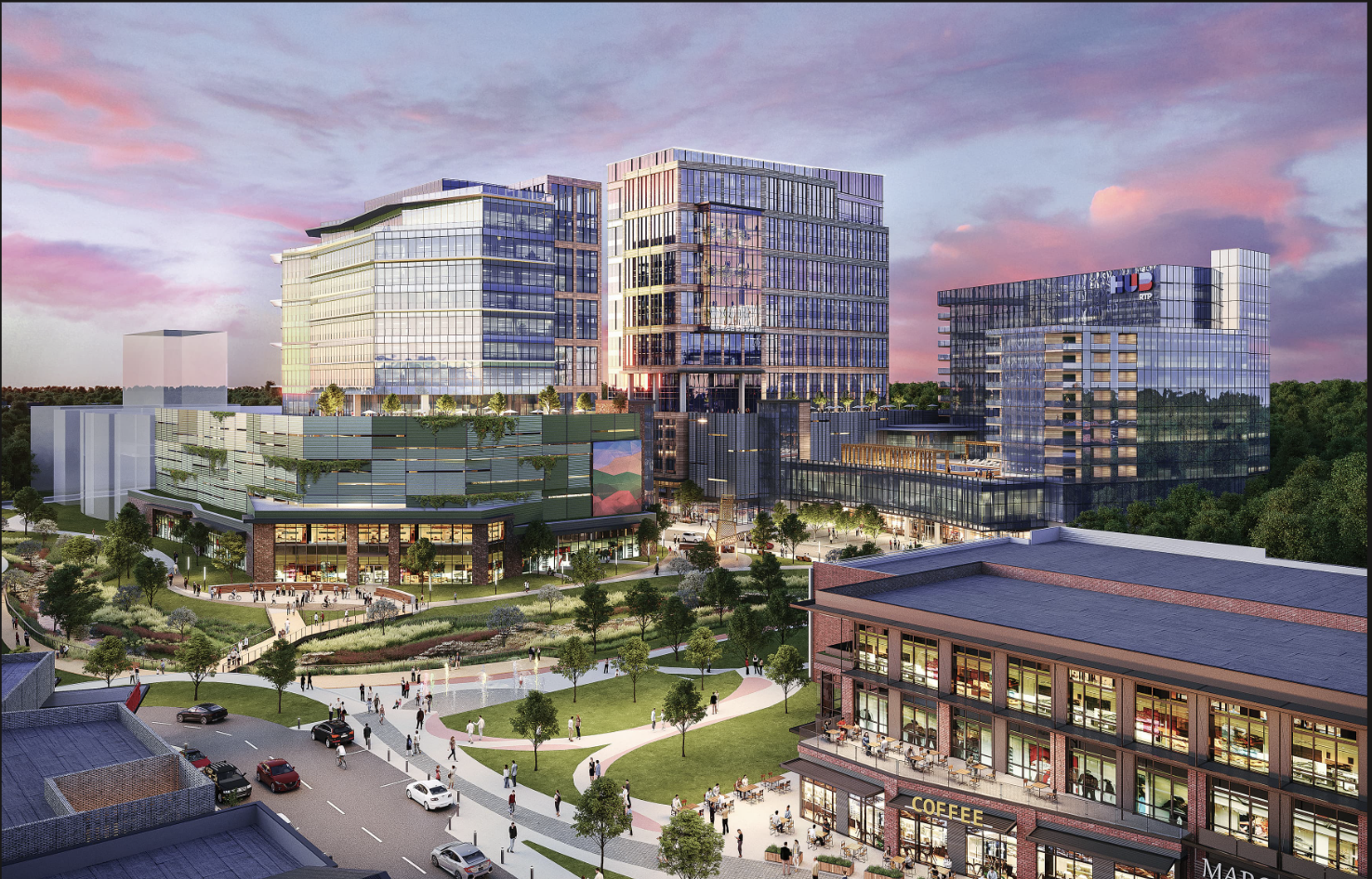
The Lenovo Center development district in Raleigh is explicitly conceived as a comparable transformation — a place where the boundaries between sports venue, neighbourhood, and entertainment destination dissolve. If an MLB ballpark can be incorporated into that vision, the resulting precinct would be one of the most ambitious and potentially transformative sports-entertainment developments in American history: a single site anchoring NHL, college basketball, college football, and Major League Baseball within a walkable campus. That is a proposition that virtually no other city in America can replicate, and it may ultimately be Raleigh's most compelling single argument to MLB's expansion committee.
The Bottom Line: Is This the Ownership Trio to Get It Done?
Assessing whether Dundon, Lasry, and the State of North Carolina constitute the ownership trio that finally delivers MLB to Raleigh requires weighing both the strengths and the remaining obstacles honestly.
The strengths are formidable. Lasry brings championship operating experience, a billion-dollar sports investment vehicle, existing MLB relationships through the Orioles investment, and the personal wealth ($2.2 billion per Forbes) to participate meaningfully in a $4 billion capital raise. Dundon brings proven local franchise-building expertise, existing development rights, political relationships across state and local government, and the enormous symbolic weight of a Stanley Cup Final appearance demonstrating that Raleigh can sustain and celebrate a major professional sports champion. Briner brings the signal — and potentially the capital — of institutional state backing.
The obstacles are real. The MLB expansion process has not formally launched. Commissioner Manfred's target of establishing an expansion committee before his 2029 retirement sets a broad timeline, but specific market selections could take years beyond that to finalise. The capital requirement is enormous. And Nashville, with its own passionate ownership group and global brand advantage, will not yield without a fight.
But for the first time in Raleigh's history, the ownership group assembling around an MLB bid looks genuinely capable of winning the argument. Dundon's commitment is proven. Lasry's involvement is brand-new and electrifying. The state pension fund is watching and engaging. And the market fundamentals — the highest median income of any city without an MLB team, the largest unserved broadcast market in America, a 2.2 million-person Triangle growing faster than every comparable MLB city — have never been stronger.
"It's a market that's going to continue to grow. The Triangle region has exploded, growing about 18% to 2.2 million residents in the past 10 years."
— WRAL, June 8, 2026, citing Census estimates
Raleigh's moment is now. And for the first time, the people and the capital needed to seize that moment are aligning.
SOURCES & RESEARCH
- WRAL News, Brian Murphy — 'Major sports investor wants to bring MLB to Raleigh,' June 8, 2026
- Sportico — 'NWSL's NC Courage Get Marc Lasry Investment at $155M Valuation,' March 4, 2026
- CBS17 — 'New optimism about possibility of bringing an MLB team to Raleigh,' June 2026
- WRAL News — 'North Carolina had a shot to buy part of the Carolina Hurricanes. It passed,' June 2026
- WRALSportsFan — 'Very serious: Can Hurricanes owner Tom Dundon bring MLB team to Raleigh?,' August 2024
- NC Sports Network — 'Tom Dundon Working to Bring MLB to NC'
- ABC11 / WTVD — 'Carolina Hurricanes discuss plans for renovations around PNC Arena,' 2024
- MLB Raleigh — 'The Data,' 'MLB Expansion: It's Now-or-Never for Raleigh'
- CBS17 — 'Could MLB expand to Raleigh? This ESPN list says maybe,' 2024
- The Center Square — 'Raleigh prepping diligently for when MLB expansion window opens,' 2024
- Axios Charlotte — 'Why MLB expansion could be tough for Charlotte, Triangle,' April 2026
- High School OT / WRAL — 'Could Raleigh land MLB expansion team? Hurricanes owner wants in,' 2023
Check out this article next