
The Inside Story Behind One of America's Most Compelling Luxury Real Estate Markets
Raleigh, North Carolina has become the most talked-about luxury real estate destination in the American Southeast. Behind the headlines about tech campuses, billion-dollar corporate relocations, and a booming sports scene lies a specific and urgent question for anyone watching the high-end property market: why are the country's top executives and technology leaders choosing Raleigh — and what does their arrival mean for luxury home values?
This is not a speculative story. It is happening right now, block by block, in North Hills, Hayes Barton, Five Points, and the executive corridors of North Raleigh. The forces driving this migration are structural, data-backed, and accelerating. Understanding them is essential for anyone looking to buy, sell, or invest in Raleigh luxury real estate in 2026 and beyond.
QUICK STATS: 385+ companies at Research Triangle Park | Average tech salary $151,000+ | Population growth 11.4% (2018–2023) | Home prices up 50%+ since 2016 | NC corporate tax rate dropping to 0% by 2030
The Corporate Migration That Is Rewriting Raleigh's Address Book
Every luxury real estate boom in modern American history has been preceded by a corporate migration story. Manhattan's financial district gave birth to the Upper East Side as the world's most valuable residential strip. Silicon Valley's tech explosion transformed Atherton and Los Altos Hills into America's most expensive zip codes. Now, a similar dynamic is unfolding in the Research Triangle — and the executives following the jobs are discovering that Raleigh offers something those coastal markets never could: world-class careers without the world-class cost of living penalty.
Research Triangle Park (RTP) — the 7,000-acre technology campus that remains the largest research park in the United States — is the engine of this story. Since its founding in 1959, RTP has grown into a national hub for software development, biotechnology, pharmaceutical research, and now artificial intelligence. As of 2026, more than 385 companies call RTP home, collectively contributing billions of dollars to the North Carolina economy each year. According to Raleigh Realty, 55% of all software engineers in the Raleigh-Durham area are employed in the technology sector, and the region employs more than 60,000 residents in tech roles.
The corporate names arriving or expanding read like a Fortune 500 roll call. IBM has maintained a cornerstone presence at RTP since 1965, now focused on cutting-edge research in artificial intelligence, cloud computing, and quantum computing. Cisco, Red Hat, Microsoft, Google, SAS, and Epic Games all maintain significant presences. Apple — despite a four-year extension on its campus construction timeline — has committed $1 billion over ten years to a Research Triangle Park campus that will ultimately deliver 3,000 jobs, each averaging $187,000 in annual compensation. Lowe's opened its global tech hub in South End Raleigh with over 2,000 technology workers. And in one of the most telling corporate relocation stories of the current cycle, Energizer has moved approximately 75 of its most senior executives from its St. Louis headquarters to Wake County — choosing Raleigh's talent networks and quality of life over a city it had called home for decades.
"These are just a few of the reasons why Apple is investing $1 billion over 10 years at Research Triangle Park, bringing an estimated 3,000 jobs with an average salary of $187,000."
— Homes By Dickerson, Raleigh NC
North Carolina's business tax environment is also a powerful magnet. As of 2026, the state's corporate income tax rate stands at 2% — the lowest corporate income tax rate in the nation among states that collect corporate income taxes — and is on a legislated glide path to reach 0% by 2030. For CEOs and CFOs making relocation decisions, this trajectory is not merely a cost advantage. It is a signal about the long-term philosophy of the state's economic governance.
The Numbers: Why Raleigh Makes Financial Sense for High Earners
The financial case for a top executive relocating to Raleigh is compelling from multiple angles simultaneously. Start with income taxes: North Carolina implemented a flat 3.99% income tax rate effective 2026, down from 4.25% in 2025, and continuing its descent. Compare that to California's top marginal rate of 13.3%, New York's 10.9%, or New Jersey's 10.75%. For a senior technology executive earning $500,000 annually, the after-tax income difference between California and North Carolina can exceed $45,000 per year — essentially a free luxury car lease, every year, simply by choosing a different address.
Now layer in housing costs. The median listing price in Raleigh's most prestigious neighbourhood, Hayes Barton, stands at $1.39 million as of May 2026. A comparable property in Atherton, California — the most expensive zip code in America — would cost $7 million to $10 million. In the best neighbourhoods of Greenwich, Connecticut, which historically has served as the bedroom community for Wall Street's senior executives, the same property profile commands $3 million to $5 million. What $1.5 million buys in Raleigh — a 5,000-square-foot estate on a half-acre lot in a historic, tree-lined neighbourhood, minutes from premium dining and elite schools — simply does not exist at that price point in the cities these executives are leaving.
The average tech salary in the Raleigh metro area now comfortably exceeds $151,000 per year, and many senior engineers and product managers earn considerably more. When workers in this income bracket compete for homes, median prices rise across the board. Raleigh's average sale price has climbed from $282,500 in 2016 to approximately $424,925 as of early 2026 — a 50% increase driven precisely by this high-income demand.
$151,000+ average tech salary, Raleigh metro area (2026)
50%+ increase in average Raleigh home price since 2016
3.99% North Carolina flat income tax rate (2026), dropping to 0% corporate tax by 2030
60,000+ tech sector employees in the greater Raleigh area
385+ companies based at Research Triangle Park
11.4% Raleigh population growth, 2018–2023
Quality of Life: The Factor That Seals the Deal
Talk to any executive who has relocated from New York, San Francisco, or Boston to Raleigh, and the conversation quickly moves beyond salary comparisons and tax rates to something less quantifiable but ultimately more decisive: quality of life. Raleigh consistently ranks among the best cities in the United States for livability, and in 2026, the gap between what Raleigh offers and what its coastal competitors offer — at a given price point — has never been wider.
Education is the first conversation every executive with school-age children has. Wake County Public School System is one of the largest and most celebrated in the Southeast, routinely delivering nationally ranked magnet programs and exceptional college placement rates. For executives who in their previous cities were either paying $50,000 or more per year per child for private school education, or compromising on school quality to stay within a reasonable commute, Wake County's public schools are a revelation.
Healthcare is the second. Duke University Medical Center — consistently ranked among the top five hospitals in the United States — and UNC Health's flagship medical complex are both within 30 minutes of Raleigh's most desirable luxury neighbourhoods. For executives at an age where access to world-class medical facilities weighs heavily in quality-of-life calculations, this is a significant consideration that many secondary market cities cannot match.
The cultural and recreational amenity stack has also matured dramatically over the past decade. The NC Museum of Art campus, a burgeoning farm-to-table dining scene, the Raleigh Convention Centre, professional sports teams in the NHL, NBA, NWSL, and NASCAR, and a growing calendar of national events have transformed Raleigh from a pleasant college town into a genuinely world-class mid-size city. The natural environment — four distinct seasons, proximity to both mountains and beaches, a milder climate than the Northeast — completes a package that executives who once considered Raleigh a sacrifice of lifestyle now find to be a genuine upgrade.
"From Raleigh and the Triangle to the coast and the mountains, people are continuing to relocate here for jobs, lifestyle, lower taxes, and a better quality of life."
— Living NC Real Estate, 2026
What Executives Are Buying: The 2026 Luxury Home Profile
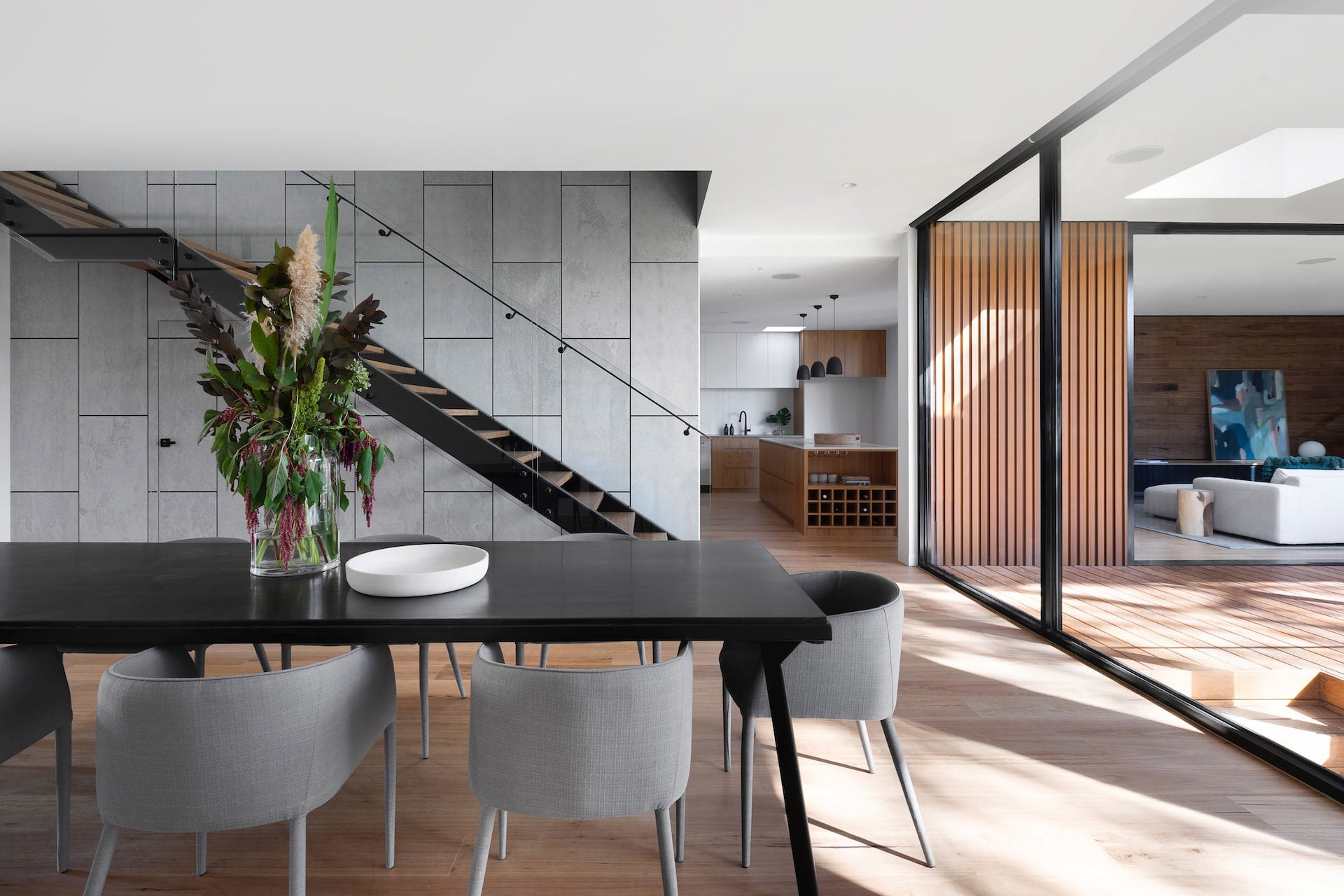
The luxury homes attracting today's Raleigh executive buyers are a sophisticated product, shaped by the preferences of a buyer cohort that has lived in premium properties in major global cities and knows exactly what they want. The 2026 Raleigh luxury home is defined by the intelligent integration of technology and timeless design — not gadgetry for its own sake, but seamlessly embedded smart-home infrastructure that enhances security, energy management, and comfort without cluttering the living environment.
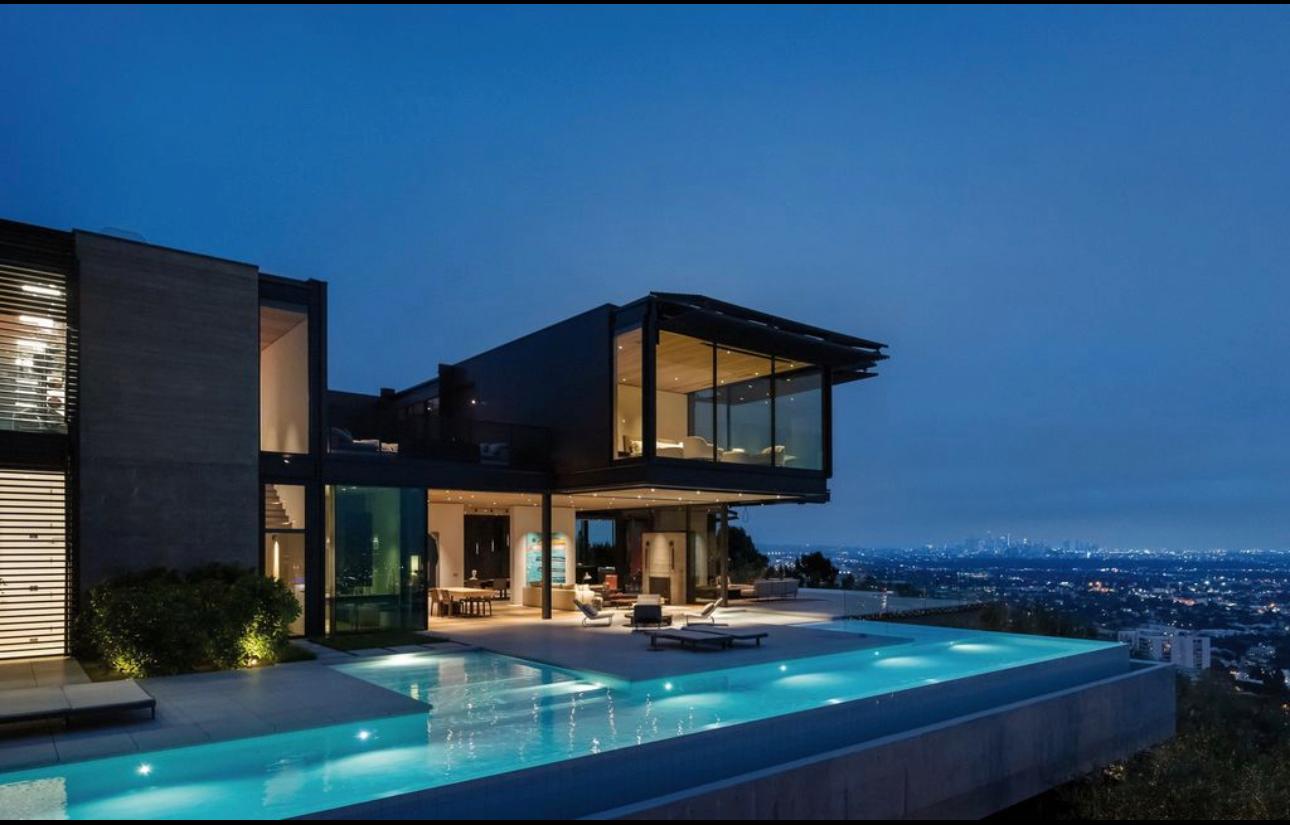
Resort-style outdoor living has become non-negotiable in the post-pandemic executive home. Raleigh's mild climate — with temperatures remaining comfortable for outdoor living from March through November — makes outdoor kitchens, pool pavilions, fire pit seating areas, and professionally designed landscaping not merely aesthetic choices but genuine extensions of liveable space. Homes that deliver this experience consistently command premium prices over otherwise comparable properties.
Chef-grade kitchens with sculleries, primary suite retreats with hotel-calibre spa bathrooms, dedicated home offices with professional-grade connectivity infrastructure, home gyms, wine cellars, and multi-vehicle garages with EV charging complete the executive buyer's checklist. The 2026 Parade of Homes in Raleigh showcases the pinnacle of these trends, including a 9,500-square-foot estate in the North Ridge subdivision with an elevator, walk-in refrigerator, and views across the Lakes golf course at the country club.
- Smart-home integration — lighting, climate, security, and entertainment under a single ecosystem
- Resort-style outdoor living — pools, pavilions, outdoor kitchens, professional landscaping
- Chef kitchens with sculleries and walk-in refrigeration
- Primary suite retreats with spa bathrooms and private courtyards
- Dedicated home offices with commercial-grade networking infrastructure
- Wellness spaces — home gyms, saunas, meditation rooms, cold plunge pools
- Multi-vehicle garages with EV charging stations
- Home theatres and dedicated entertainment levels
- Wine cellars and private tasting rooms
- Whole-home generators and energy management systems
Corporate relocation demand is also sustaining a robust luxury rental sub-market as executives arrive with relocation packages and seek furnished turnkey properties while their permanent homes are custom-built or identified. High-end executive rentals in Raleigh average $4,000 to $8,000 per month — a structural demand driver that tracks directly with the continued growth of corporate arrivals.
The Neighbourhoods Winning the Executive Relocation Race
North Hills — Raleigh's Midtown
North Hills sits at the top of the executive relocation hierarchy. Located along Six Forks Road just north of the I-440 beltline, this rapidly developing mixed-use district has transformed from a traditional shopping centre into a walkable urban village combining upscale residential living with premier shopping, dining, and entertainment. High demand from tech executives — particularly those arriving from Apple, Cisco, and Red Hat — has pushed the median listing price to $1.495 million as of early 2026, with year-over-year appreciation of 31.4%. Luxury listings in North Hills typically move within 30 to 45 days, a testament to the depth of demand at this price point.
Hayes Barton — The Prestige Address
For executives who prioritise architectural distinction and historic neighbourhood character above all else, Hayes Barton is the destination. Established in the 1920s by landscape architect Earle Sumner Draper and named after Sir Walter Raleigh's birthplace in Devon, England, Hayes Barton features Tudor Revival, Colonial Revival, and Georgian estates on large, professionally landscaped lots with mature tree canopies. The median listing price stands at $1.39 million as of May 2026, up 39.5% year over year, with prime estates reaching $3.5 million. It is Raleigh's most irreproducible address — by definition, there will never be another Hayes Barton.
Brier Creek — The Pragmatic Executive Choice
For executives who prioritise commute efficiency over prestige — particularly those travelling daily to Research Triangle Park or frequently through RDU International Airport — Brier Creek delivers an exceptional proposition. Located at the intersection of Interstates 40 and 540, Brier Creek is ten minutes from RTP and fifteen minutes from RDU. The Brier Creek Country Club, anchored by an Arnold Palmer-designed golf course, serves as the luxury anchor of a community ranging from townhomes at $300,000 to custom estates approaching $1 million.
Five Points — Character and Walkability
The Five Points district — encompassing Hayes Barton, Bloomsbury, Vanguard Park, Georgetown, and Roanoke Park — offers the combination of Craftsman and Colonial architecture, genuine walkability, and Inside-the-Beltline proximity that appeals to executives drawn to urban authenticity rather than suburban amenity. The median price across Five Points is approximately $905,000 as of early 2026, with 35.9% year-over-year appreciation. The neighbourhood's finite supply of character homes in a walkable, historic district ensures that appreciation here will continue to outperform the broader market.
Why Raleigh Beats Every Coastal Alternative in 2026
When senior executives weigh Raleigh against its competitors — Austin, Nashville, Charlotte, or the coastal tech markets — several factors consistently emerge as decisive. Raleigh offers the intellectual density of a major tech hub, powered by three Tier-1 research universities within 30 minutes and a mature corporate ecosystem, without the punishing cost of living found in San Francisco, Seattle, or New York. The relative affordability of Raleigh's luxury market compared to coastal alternatives is not a reflection of lesser quality — it is a reflection of greater value.
Austin, which was until recently considered the primary beneficiary of the Sun Belt tech migration, has seen its cost-of-living and housing affordability advantages significantly eroded by its own success. Home prices in Austin's premium neighbourhoods now rival those in Raleigh at 30% to 50% higher price points, while Texas's lack of state income tax advantage — never as decisive as often claimed — no longer offsets the higher housing cost for senior executives with substantial real estate equity. Nashville, Raleigh's other primary peer competitor, similarly faces increasing housing cost pressure as its downtown-anchored lifestyle proposition has attracted a wave of corporate relocations that are steadily compressing its relative affordability advantage.
Raleigh's unique combination of intellectual capital, tax efficiency, lifestyle quality, and real estate value still represents a genuine market inefficiency — one that the executive real estate market is actively, and rapidly, correcting. Those who understand what is driving this correction, and who act ahead of the full weight of Apple's campus employment, Google's engineering hub development, and any MLB franchise announcement, are positioned to benefit most from what remains one of the best-value luxury real estate opportunities in the United States.
"The average tech salary in the Raleigh metro area now comfortably exceeds $151,000 per year. When workers in this income bracket compete for homes, median prices rise."
— Raleigh Realty, March 2026
The Verdict: Raleigh's Luxury Market Is in the Early Middle Innings
The executives and technology leaders buying luxury homes in Raleigh in 2026 are not pioneers in a raw market. They are intelligent investors in a market that has already proven its fundamentals, established its prestige tier, and is now about to compound the gains of the past decade with the next wave of corporate investment, sports infrastructure development, and high-net-worth in-migration.
For buyers, the window to enter Raleigh's luxury market at current prices — before Apple's campus employment reaches critical mass, before any MLB franchise announcement adds a new employment and entertainment catalyst, and before the downtown entertainment districts Dundon and Lasry are building open their gates — is measurable in months and years, not decades. The executives making these calculations are arriving at the same conclusion, one luxury home at a time.
Raleigh is not the next Austin. It is not the next Nashville. It is Raleigh — a city with its own distinctive identity, incomparable academic ecosystem, proven corporate track record, and the most exciting sports and entertainment development pipeline in the Southeast. And its luxury real estate market is only getting started.
SOURCES & RESEARCH
- The Coley Group — 'Why Major Companies Are Relocating to Raleigh,' January 2026
- ARC Relocation — 'Companies Moving to Raleigh: Why Businesses Are Moving to North Carolina'
- McNeil Burbank — 'Raleigh Luxury Real Estate 2025: Leading the Sun Belt Market'
- Homes By Dickerson — 'Global Companies are Moving to Raleigh: Here's Why'
- AD Mortgage — 'Raleigh, North Carolina: Top Neighborhoods in 2026,' March 2026
- SoFi — 'Raleigh Housing Market: Trends & Prices,' 2026
- Phil Slezak Real Estate Talk — 'Raleigh Luxury Buyer Trends for 2025'
- Real Estate Talk with Phil Slezak — 'Raleigh Housing Market Update 2025'
- Movoto — Hayes Barton, Raleigh NC, May 2026 Market Data
- Living NC Real Estate — 'Is 2026 a Good Time to Buy a Home in North Carolina?'
Check out this article next