
Development, redevelopment, infrastructure, and changing land use are quietly redrawing the map of the Capital City.
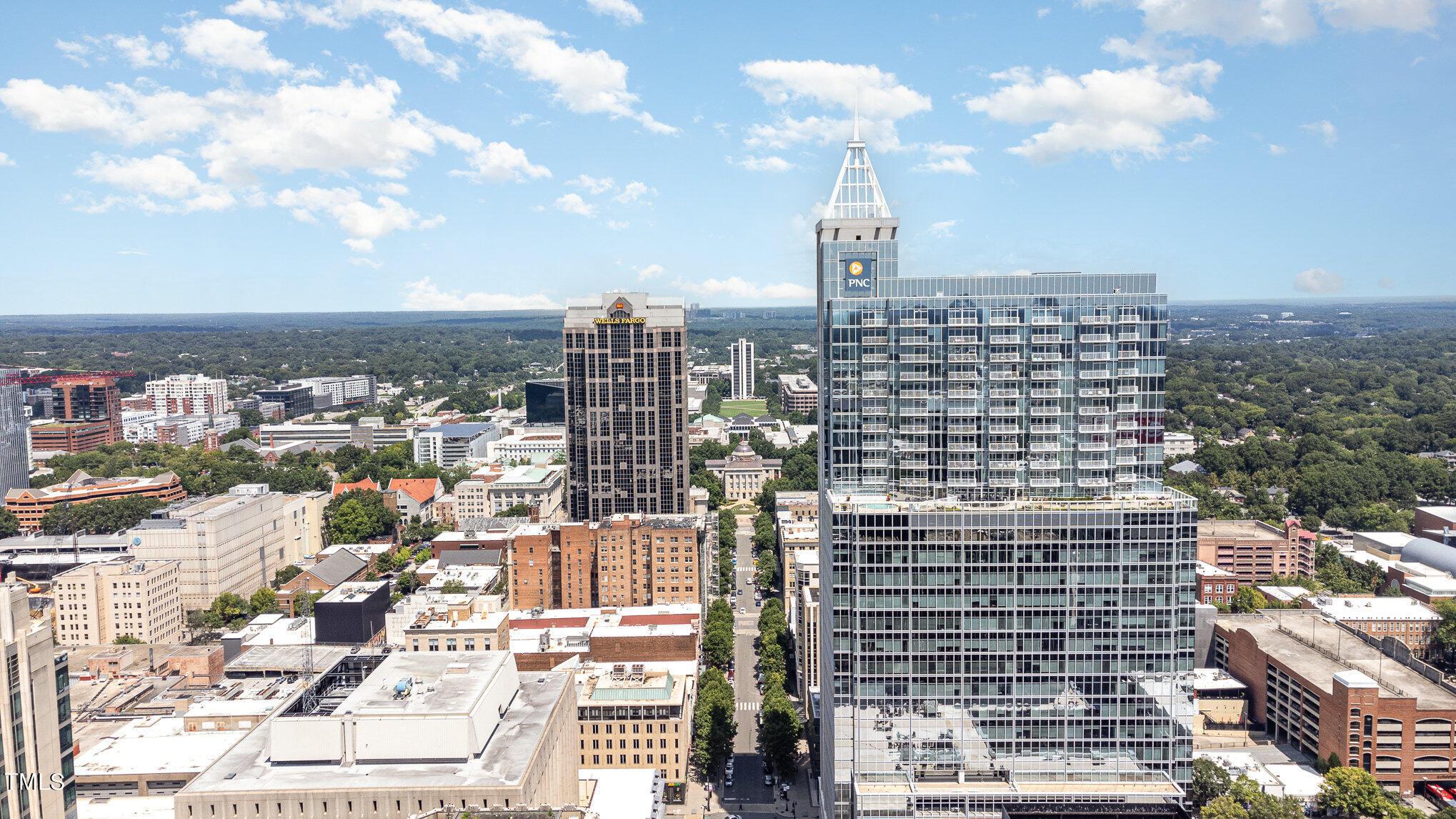
Raleigh doesn't feel like a city in the middle of a transformation — until you look at the permits, the transit plans, and the acreage changing hands. Between a 308-acre park build-out, a 140-acre mixed-use district, four new transit corridors, and a zoning ordinance that has already reshaped how close-in lots get used, several Raleigh neighborhoods are on a five-year trajectory that will make them close to unrecognizable to anyone who hasn't visited in a while.
South of Downtown: Dix Park and Its Ripple Effect
Dorothea Dix Park is a 308-acre former hospital campus being converted into what will eventually be one of the largest urban parks in the country. The 18-acre Gipson Play Plaza opened in 2025 as the park's first major phase, complete with gardens, water features, and a large-scale public art installation. In 2026, the historic Flowers Cottage is being remodeled into a concessions and gathering hub, and the city has begun demolishing four remaining Dix Park buildings to convert their footprints into additional park space. A creek realignment and restoration project will eventually link Boylan Avenue to South Saunders Street, physically stitching downtown Raleigh to the park with new pathways.
Development follows parks, and Dix Park is no exception. The Weld, a twin-tower apartment project at 925 S. Saunders Street, is delivering more than 600 units across two 20-story buildings directly adjacent to the park. Rockway, a Kane Realty project near the park's entrance along the Rocky Branch Greenway, is adding another 300-plus apartments. Longtime residents in this part of the city — an area some describe as having been "the suburbs" a generation ago — are now watching 20-story towers rise within walking distance of homes their families have owned for decades.
Downtown South: A 140-Acre District, Finally Moving
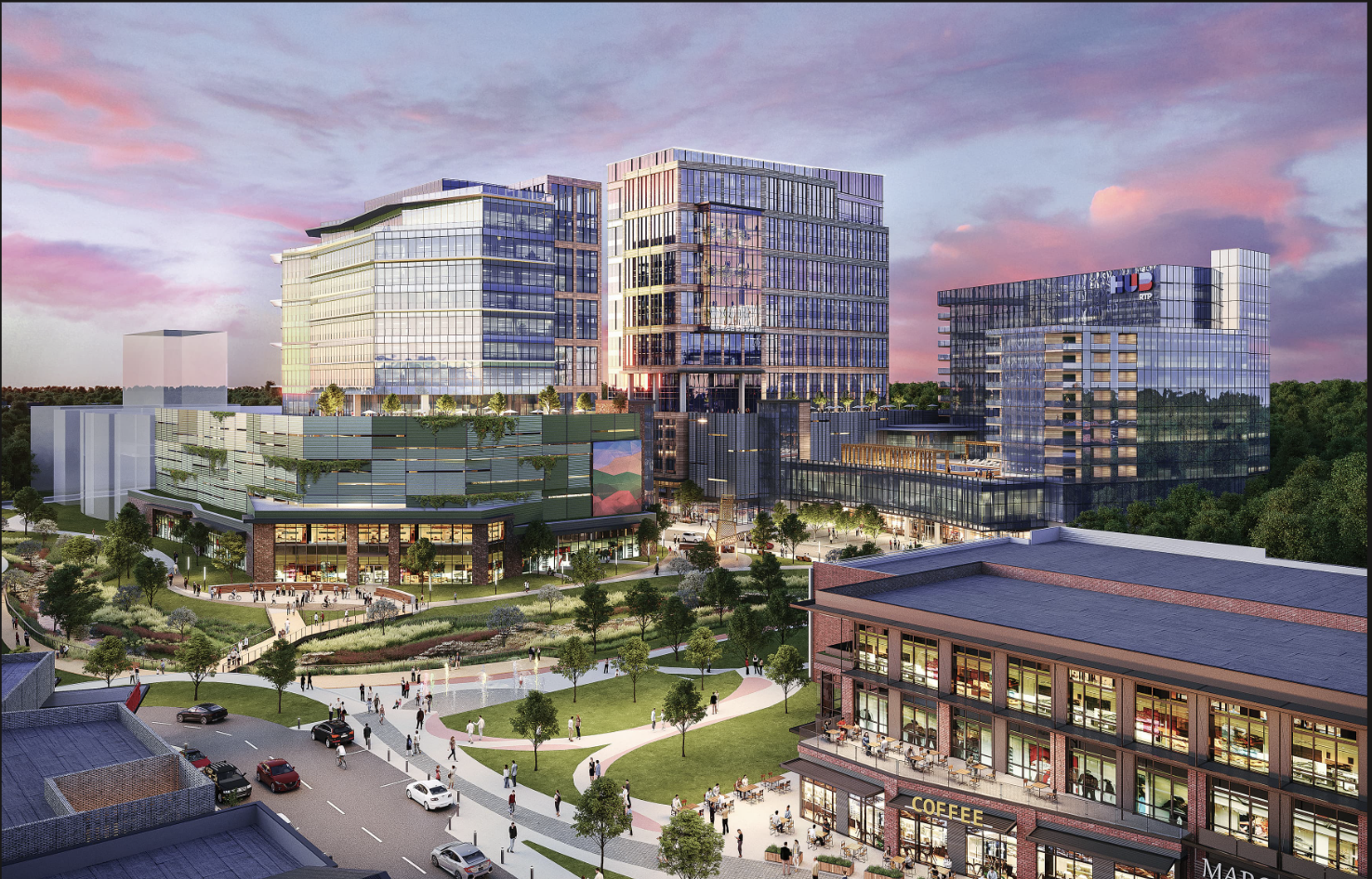
Few projects capture Raleigh's next five years better than Downtown South. Pursued by Raleigh-based Kane Realty Corp., the 140-acre master-planned district south of downtown is slated to include office space, retail, residential units, and a soccer stadium that could seat up to 15,000 people — a potential new home for the North Carolina Courage of the National Women's Soccer League. After years of delays, filings in 2026 indicate construction on the first phase, roughly 350 garden-style apartment units across eight buildings, could break ground before the end of the year.
By the end of 2025, roughly $1.1 billion in new construction had already been completed or was underway south of Davie Street, with another $2.1 billion in future development planned for the surrounding area, according to reporting on the district's momentum. City officials have described the area as one of the most active pockets of the entire metro, with growth continuing to push south from the traditional downtown core.
It's been a booming area for the city of Raleigh, right on the outskirts of the downtown corridor. You have the projects that have opened up right outside of Dix Park and Downtown South, and development continues to move south.
— Local officials and industry leaders discussing South Raleigh's growth trajectory
That growth is not without friction. Residents of Rochester Heights, one of Raleigh's historically significant African American neighborhoods bordering the district, have raised ongoing concerns about environmental impact and displacement pressure as large-scale redevelopment closes in around them. City planners have said connectivity between Downtown South and surrounding legacy neighborhoods will be a defining test of whether the district integrates well or simply overwhelms what's already there.
North Hills and Midtown: The Innovation District Effect
North Hills has spent a decade turning itself into one of the Triangle's most valuable submarkets, and the trend is accelerating. Home values in North Hills rose more than 31 percent year-over-year as of early 2025 data, more than double the citywide pace, and the first phase of the North Hills Innovation District — another Kane Realty project — opened in 2025, adding office and mixed-use space aimed at cementing the area as a live-work-play hub for the region's growing employment base.
Along the New Transit Corridors
Perhaps the most structurally significant change coming to Raleigh over the next five years isn't a single development — it's transit. Wake County voters approved a half-cent sales tax back in 2016 to fund the Wake Transit Plan, which includes roughly 20 miles of dedicated Bus Rapid Transit (BRT) lanes across four corridors, with full service targeted by 2030.
Corridor | Route | 2026 Status |
New Bern Avenue | Downtown to East Raleigh | Phase one construction underway |
Southern | Downtown to Garner (~5 miles) | Progressing from 30% toward 60% design |
Western | Downtown Raleigh to Downtown Cary (~12 miles, 20 stations) | Nearing final 30% design; NEPA review continuing |
Northern | Downtown to Midtown & Triangle Town Center | Council endorsed the route study in May 2026 |
Station-area planning is already underway along each corridor, and history from other BRT cities suggests these station zones tend to attract exactly the kind of missing-middle and mixed-use redevelopment that reshapes a neighborhood's character over five to ten years. Corridors like Western Boulevard and New Bern Avenue — historically lower-density commercial strips — are the most likely candidates for the next wave of townhome and apartment construction as service comes online.
Inside the Beltline: Zoning Is Quietly Rewriting Old Neighborhoods
Since Raleigh's 2021 "missing middle" zoning reform legalized duplexes, triplexes, townhomes, and small apartment buildings in many neighborhoods that had previously allowed only single-family detached homes, close-in neighborhoods have quietly begun to change lot by lot. Between July 2021 and February 2024, the city approved a substantial pipeline of new missing-middle units, and a 2025 follow-up ordinance, sometimes called Missing Middle 2.0, allows developers to request additional density in exchange for setting aside a share of units as affordable housing.
The visible result: Raleigh recorded 252 residential demolitions in 2025, more than double the 124 recorded in 2024 and well above the 105 recorded in 2023, concentrated heavily inside the Beltline and in close-in, walkable neighborhoods where land value alone often exceeds what an aging house is worth. Not everyone is on board — neighborhood groups in areas like Hayes Barton have filed ongoing litigation challenging both the original ordinance and the 2025 update, arguing the process moved too fast with too little public notice. Regardless of how that litigation resolves, the trajectory is already visible on the ground: single lots that once held one house increasingly hold two, three, or four.
The Lenovo Center District and the Fairgrounds Corridor
Around the Lenovo Center (formerly PNC Arena), plans call for a new mixed-use district anchored by roughly 200,000 square feet of retail, a 150-key hotel, and a 4,300-seat ballroom, alongside new parks, plazas, and promenades designed to connect the venue to the surrounding area for the first time in a meaningful way. Combined with an expanding Raleigh Convention Center — adding nearly 300,000 square feet of new convention space — and a relocated, permanent Red Hat Amphitheater downtown, the western and central edges of downtown Raleigh are set for a wave of new foot traffic and adjacent residential demand over the next five years.
What This Means If You Own Property Nearby
For homeowners near Dix Park, Downtown South, North Hills, or any of the four BRT corridors, the next five years carry two realities at once: rising land values driven by proximity to major public and private investment, and rising pressure — from traffic, construction, zoning change, and redevelopment interest — on the character of the neighborhood as it existed before. Neither is inherently good or bad; both are simply the mechanics of a growing city. The practical move is to understand exactly where your property sits relative to these projects, because in Raleigh right now, that location is doing more to determine your five-year outlook than almost any other factor.
SOURCES & RESEARCH
Figures in this article reflect data compiled from Redfin, Zillow, Doorify MLS/Triangle MLS, the St. Louis Federal Reserve (FRED), Freddie Mac, the National Association of Realtors, the City of Raleigh, the Wake County Transit Plan, Dix Park Conservancy, and Triangle-area business and news outlets including WRAL, Axios Raleigh, and the Triangle Business Journal, current as of August 2026. Market conditions change quickly; for a personalized read on your street or price point, connect with the SteelOak RES team.
Check out this article next