
Beyond Dix Park and Downtown South: the corridors, malls, and commercial strips quietly setting up for their own transformation.
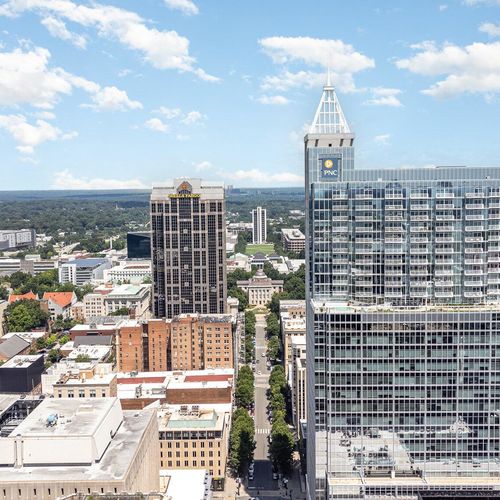
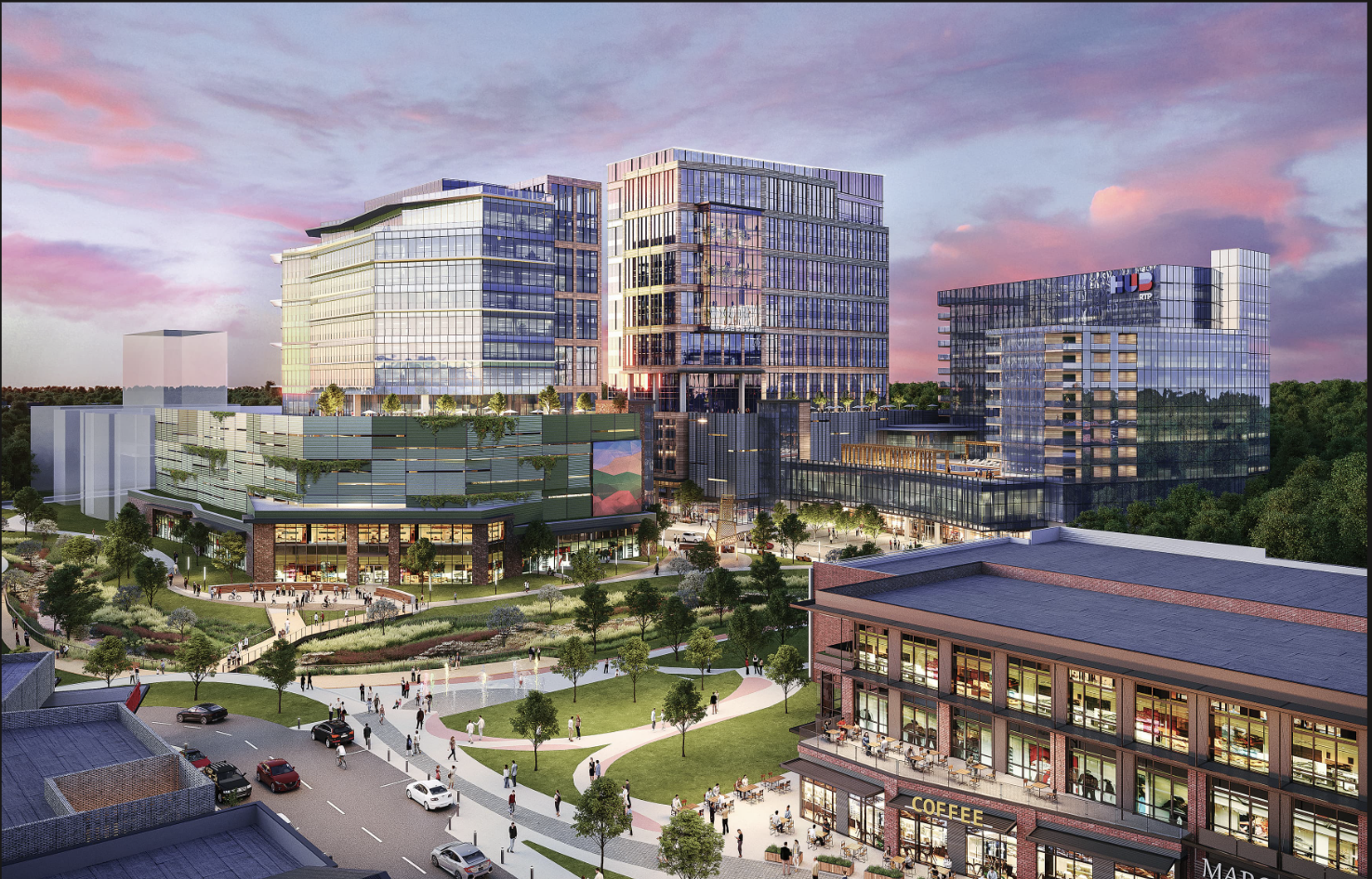
Dix Park and Downtown South get most of the attention when Raleigh's transformation comes up, and for good reason — but they're not the only parts of the city on a five-year collision course with change. A billion-dollar mall renovation, a decades-old corridor advocacy effort finally seeing infrastructure dollars, and a wave of missing-middle redevelopment spreading well beyond downtown are reshaping neighborhoods that don't usually make the headlines. Here's where else to watch.
Crabtree Valley: A Mall Betting on Reinvention
In June 2025, California-based REIT Macerich acquired the 1.3-million-square-foot Crabtree Valley Mall for $290 million, marking the company's first entry into the Southeastern United States. Built in 1972 and anchored by Belk and Macy's, Crabtree has struggled in recent years with vacancies, including a long-empty former Sears space that finally landed a new tenant in 2026. Macerich has committed roughly $60 million toward redevelopment and leasing between 2025 and 2028, with early renderings showing updated interiors, new lighting and landscaping, and a broader push to attract higher-tier retail brands to the Glenwood Avenue corridor.
For the surrounding area, this matters beyond the mall's own walls. Local agents and city planning documents alike point to Crabtree's redevelopment as a likely lift for adjacent residential pockets — Glenwood, Five Points, and Crabtree Pines among them — as a modernized retail anchor tends to pull nearby home values upward over a multi-year horizon, even as the renovation itself brings short-term construction disruption and added traffic along Glenwood Avenue.
New Bern Avenue: More Than a Decade in the Making
Long before Bus Rapid Transit became a citywide talking point, a dedicated advocacy group — the New Bern Avenue Corridor Alliance, formed in 2012 — was pushing for infrastructure improvements along this historically under-invested corridor stretching from I-440 into East Raleigh. That patience is finally paying off: New Bern Avenue is the furthest along of Raleigh's four BRT corridors, with phase-one construction already underway in 2026. As dedicated transit lanes and stations take shape, the surrounding commercial strip and adjacent residential streets — historically lower-density and comparatively affordable relative to close-in neighborhoods west of downtown — are positioned for exactly the kind of transit-driven redevelopment interest that has reshaped station-adjacent areas in other cities.
This is also one of the corridors where the tension between investment and displacement is most acute. East Raleigh and the neighborhoods along New Bern Avenue include some of the city's most historically significant Black communities, and city planning conversations around the corridor have consistently included questions about how to bring infrastructure investment without pricing out the residents who advocated for it for over a decade.
Southeast Raleigh and the Edge of Downtown South's Footprint
As Downtown South's 140-acre district and the broader wave of development south of Davie Street continue to advance — more than $1.1 billion completed or underway since 2023, with another $2.1 billion planned — the residential neighborhoods bordering that footprint are being pulled into the conversation whether they sought it out or not. Rochester Heights, a historically significant African American neighborhood adjacent to the district, has already raised concerns about environmental impact and displacement pressure as large-scale redevelopment closes in. Over the next five years, expect this pattern to repeat across several Southeast Raleigh pockets as the area's redevelopment footprint continues expanding outward from downtown.
West Raleigh and the Western BRT Corridor
The Western Corridor of Wake County's Bus Rapid Transit build-out — a roughly 12-mile route connecting downtown Raleigh to downtown Cary along Western Boulevard, with up to 20 planned stations — is approaching the completion of its 30 percent design phase in 2026, with public engagement on more detailed plans expected to follow. The corridor already serves major destinations including NC State University, Pullen Park, and Dix Park, and runs directly past aging, low-density commercial strips along Western Boulevard that planning studies have specifically flagged as candidates for future mixed-use redevelopment once transit service locks in a reliable stop.
Every Close-In Neighborhood Under Missing Middle Zoning
It's worth restating because it's easy to miss lot by lot: Raleigh's 2021 missing-middle zoning reform, and its 2025 expansion, apply broadly across many close-in neighborhoods, not just the high-profile development zones. With 252 residential demolitions recorded in 2025 alone — more than double the prior year — the cumulative effect of thousands of small, individual redevelopment decisions is arguably reshaping more of Raleigh's built environment over five years than any single mega-project, simply because it's happening across so many streets simultaneously rather than in one concentrated footprint.
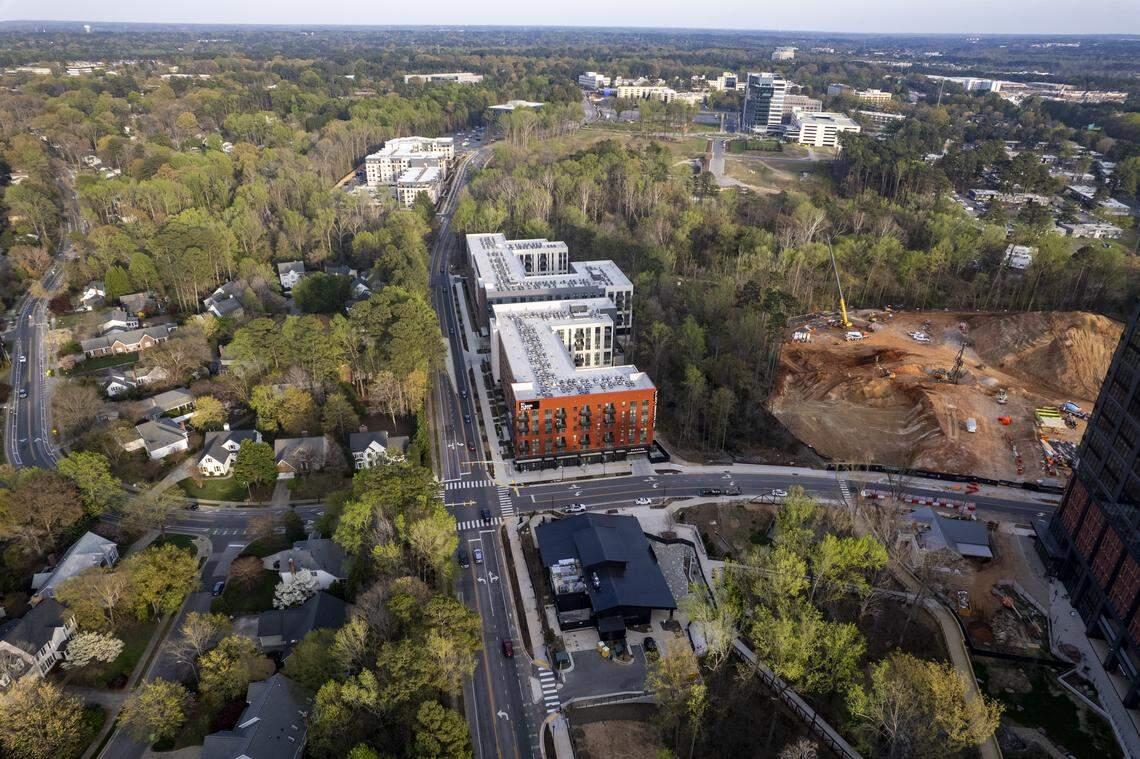
Every corner of the Triangle has a significant amount of construction ongoing, as the region continues pulling in thousands of new residents and jobs and becomes a magnet for investment.
The Common Thread
Whether it's a mall betting $60 million on reinvention, a corridor that waited over a decade for its transit investment to materialize, or hundreds of individual lots quietly being redeveloped under new zoning rules, the pattern across Raleigh right now is the same: change is arriving unevenly, driven by wherever capital, policy, and infrastructure happen to intersect. For property owners and buyers alike, the next five years reward paying attention to those intersections specifically — not just to a neighborhood's name or reputation, but to what's actually funded, approved, and underway nearby.
SOURCES & RESEARCH
Figures in this article reflect data compiled from Redfin, Zillow, Doorify MLS/Triangle MLS, the St. Louis Federal Reserve (FRED), Freddie Mac, the National Association of Realtors, the City of Raleigh, the Wake County Transit Plan, Dix Park Conservancy, and Triangle-area business and news outlets including WRAL, Axios Raleigh, and the Triangle Business Journal, current as of August 2026. Market conditions change quickly; for a personalized read on your street or price point, connect with the SteelOak RES team.
Check out this article next