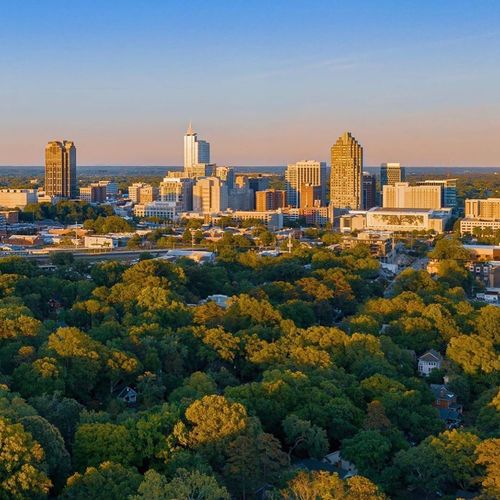


MLB Commissioner Rob Manfred has targeted two expansion franchises before 2029 — one East Coast, one West Coast. Raleigh is on the short list. Hurricane owner Tom Dundon has stated he 'still wants to bring Major League Baseball to North Carolina.' This is a comprehensive, data-driven analysis of exactly what that would mean for Raleigh's luxury real estate market, its broader economy, and the buyers and investors who are watching closely.
Few urban development stories generate more speculation — and less data-grounded analysis — than the arrival of a professional sports franchise. The civic enthusiasm is understandable. But for the serious real estate investor, the luxury homebuyer evaluating a $3M to $6M purchase in Raleigh, and the seller calculating the appreciation potential of their estate over the next decade, the relevant question is not whether an MLB team would be exciting. It is whether an MLB franchise would create the sustained, structural economic conditions that support luxury real estate appreciation.
This analysis attempts to answer that question honestly. It draws on the most current available research — including an NC State University economic impact study published in August 2025, detailed reporting from multiple local and national sources on the current status of Raleigh's MLB candidacy, a Newswise expert analysis from December 2025, data on the Carolina Hurricanes' existing real estate development program, and comparable data from cities that have received MLB franchises in recent history. The answer is nuanced and worth reading carefully.
The Current Status of MLB in Raleigh: What Is Actually Known
As of May 2026, Raleigh does not have an MLB franchise and has not received a formal commitment from Major League Baseball. What it does have is a serious, documented candidacy backed by meaningful institutional infrastructure and commitment from the most important local stakeholder.
- Tom Dundon's stated commitment: Multiple CBS17 sources confirmed in September 2025 — after Tom Dundon's agreement to purchase the Portland Trail Blazers — that 'Tom still wants to bring Major League Baseball to North Carolina' and 'this will not impact the Carolina Hurricanes.' His commitment to pursuing MLB for Raleigh is explicitly separate from his other sports investments.
- Dundon's infrastructure investment: Dundon's agreement with the Centennial Authority on a multi-year, $300 million renovation project for the Lenovo Center and development rights to approximately 80 acres of land around the venue — with the Hurricanes' arena lease extended through 2044 — was described by Forbes as an investment predicated on 'mixed-use development and MLB in Raleigh's future.'
- MLB Commissioner's timeline: Rob Manfred has publicly stated he would like the announcement of two expansion teams before 2029, preferably one on the East Coast and one on the West Coast. Raleigh Mayor Janet Cowell confirmed in a September 2025 roundtable that the city's position is to 'always be ready' and to 'make sure our economics are solid enough that we are a contender to host a Major League Baseball team.'
- Durham Bulls compatibility: Jim Goodmon, owner of the Durham Bulls AAA minor league team, has stated that his team's existing agreement with MLB would allow for a major league team to come to the Raleigh market without obstruction from the minor league franchise — removing a significant traditional obstacle.
- Raleigh-Durham-Fayetteville TV market: The combined television market ranks 23rd nationally. This is large enough to support a franchise but smaller than the top 15 markets where most existing MLB teams operate, making it a consideration in the overall economic analysis.
- Competition: Raleigh is competing with Austin, Nashville, Charlotte, Montreal, and Mexico City for potential expansion slots or relocation. Each has distinct strengths and weaknesses. Newswise's December 2025 expert analysis notes that Dundon's 'entrepreneurial expertise and strong interest' is Raleigh's primary advantage, while the absence of major corporate headquarters limits sponsorship revenue certainty relative to Charlotte's financial sector.
Before 2029 MLB Commissioner Manfred's stated timeline for 2 expansion team announcements | 80 acres Land around Lenovo Center controlled by Dundon — potential stadium site | 23rd Raleigh-Durham-Fayetteville TV market ranking nationally |
The Economic Impact: What Research Actually Shows
The most rigorous available analysis of what an MLB team would mean for Raleigh's economy comes from an NC State University study published in August 2025, analyzed by Dr. Michael Walden of the NC State College of Agriculture and Life Sciences. The conclusions are measured and data-grounded — worth quoting in full before adding context.
Dr. Walden's analysis is direct: 'My conclusion is Charlotte and Raleigh are feasible options for an MLB team.' On the economic impact question, the research identifies three primary mechanisms through which an MLB franchise generates regional economic effects: 'if having an MLB team makes the region more interesting and fun to live in, then jobs and incomes can increase from more businesses and workers wanting to live in the region. If the MLB team causes regional residents to spend more of their entertainment money in the region rather than outside the region, then local businesses will benefit. Last, and perhaps most important, if an MLB team can attract people living outside the region to visit the region for games and spend money on game tickets, food, lodging and other purchases, then this could be the biggest economic benefit.'
The study's quantitative conclusion: 'Economic impact studies of existing MLB teams in cities with similar populations to Charlotte and Raleigh show permanent new jobs created in the economy in the 3,000 to 4,000 range, and annual income generated in the $500 million range.' These are regional totals, not direct team employment — they include the multiplier effects of stadium construction, game-day spending, tourism, and the broader economic activity that concentrates around a major league venue.
An NC State University study published August 2025 concludes that an MLB team in Raleigh would generate 3,000 to 4,000 permanent new regional jobs and approximately $500 million in annual regional income — based on comparable cities. These are structural, permanent economic effects, not one-time construction impacts.
The Direct Employment Effect
A major league baseball team directly employs roughly 200 to 300 full-time equivalent staff across the front office, field operations, medical, scouting, marketing, and stadium management functions. But the more significant employment figure is the multiplier: every MLB job creates approximately 10 to 15 indirect jobs in the surrounding service economy — restaurants, hotels, transportation, retail, and entertainment businesses that cluster around a stadium district and benefit from the 81-plus home game days per year. Over a full season, a major league team brings 2 to 4 million gate visitors to its home market — visitors who spend on transportation, food, lodging, and entertainment beyond the game itself.
The Stadium District Catalyst
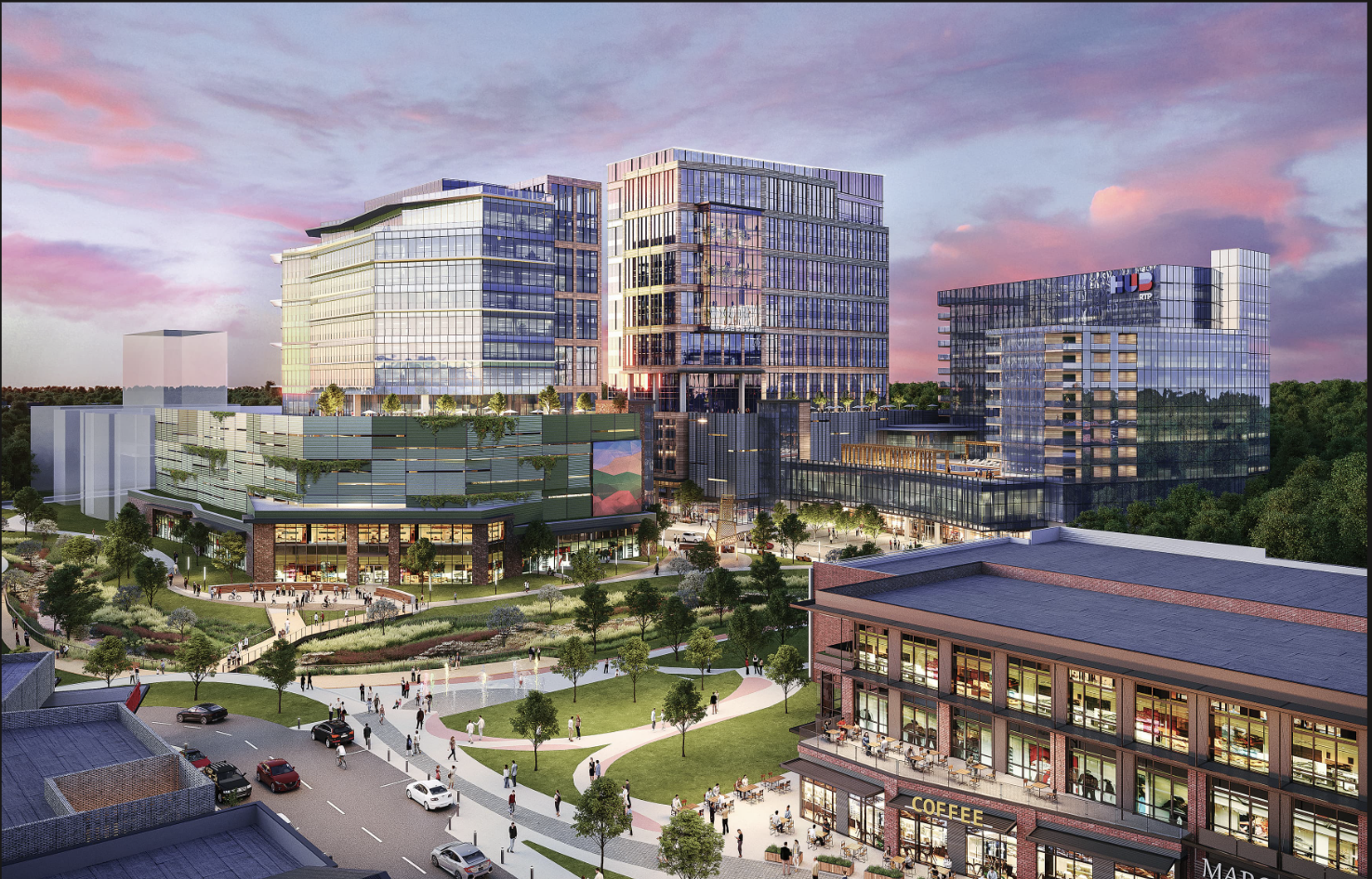
The most direct real estate mechanism is not the franchise itself but the stadium district it anchors. The physical development of a major league baseball stadium — typically a $1B+ public-private project requiring transit access, parking structures, mixed-use retail, restaurant and entertainment activation, and hotel capacity — creates an urban district investment that appreciates the surrounding residential market through both amenity proximity and increased employment density.
The precedent is well documented. Camden Yards in Baltimore, Petco Park in San Diego, Target Field in Minneapolis, and Truist Park in the Atlanta suburbs all catalyzed multi-billion-dollar mixed-use development in their surrounding neighborhoods within five years of opening. The pattern is consistent: a well-designed stadium in an emerging urban district accelerates the real estate cycle by 5 to 10 years relative to the baseline trajectory without the stadium.
In Raleigh's case, the stadium site is already known: Dundon controls 80 acres adjacent to Lenovo Center. The Carolina Hurricanes' $1B mixed-use Sports and Entertainment District — already in construction phase one as of December 2025 — is being developed with the future MLB stadium in mind. 'Dundon envisions mixed-use development and MLB in Raleigh's future' per Forbes. The infrastructure is being built now; the franchise would activate it at a scale the hockey team alone cannot.
What an MLB Team Does for Raleigh's Brand — and Why That Matters for Real Estate
The most underestimated economic benefit of a major sports franchise is the one that is hardest to quantify directly: what it does to a city's national brand and its competitiveness in executive relocation conversations. This is where the luxury real estate connection is clearest.
The mechanism works as follows: a major league franchise generates sustained national media coverage — not just sports coverage, but city coverage. Every playoff run, every marquee game, and every national broadcast appearance of 'Raleigh' in the context of major league sports is a relocation marketing event for the city. High-income professionals in New York, Chicago, and Los Angeles who might never have considered Raleigh become aware of it as a city with professional sports infrastructure — a cultural indicator that matters to many corporate decision-makers.
Newswise's December 2025 MLB expansion analysis articulates the Charlotte versus Raleigh distinction precisely: 'Charlotte is very rapidly becoming one of the centers of finance in the US, which is going to be incredibly attractive to Major League Baseball for finding sponsorships and luxury box buyers — that's instant revenue. Raleigh-Durham is centered more on health technology and computing services, and while sponsorships aren't as obvious, the real advantage is the entrepreneurial expertise and strong interest from folks like Tom Dundon.'
For luxury real estate specifically, the brand mechanism plays out in corporate relocation decisions. When Apple, Google, Fujifilm, and Microsoft evaluate where to place senior employees, the city's lifestyle amenities — including professional sports entertainment — factor into the desirability assessment that shapes how aggressively employees accept relocation offers. A city with NHL, NBA (Trail Blazers connection is indirect but noted), and eventually MLB is a meaningfully different proposition for a San Jose executive than a city with NHL alone.
The Direct Luxury Real Estate Impact: Price and Demand Effects
The connection between an MLB franchise and specific luxury home price movements is indirect and operates over a 3 to 10 year horizon — not through immediate price jumps following a franchise announcement. Understanding this distinction is essential for buyers and investors making decisions based on the MLB thesis.
The Relocation Demand Channel
The most significant luxury real estate mechanism is the sustained inflow of high-income professionals that a major league team's operations — front office, player salaries, media, corporate sponsorship, and the employment multiplier in the entertainment ecosystem — brings to a market over time. Based on NC State's economic analysis, the 3,000 to 4,000 permanent new regional jobs include a significant cohort at income levels that support $800,000 to $2M+ home purchases. The player salaries alone — with roughly half spent in the home region per Dr. Walden's analysis — represent a concentrated source of high-net-worth household formation. Major league baseball players earn an average of approximately $4.5 million per year; a 26-man roster with half spending in the Raleigh market creates a meaningful luxury buyer cohort.
The Stadium District Premium
Properties adjacent to a well-designed stadium district — within a 2 to 5 mile radius — typically command a 5 to 15 percent premium over comparable properties at greater distance from the development, based on comparable markets. The mechanism is amenity proximity: walkable access to a critical mass of dining, entertainment, and event programming. In Raleigh's case, the Lenovo Center / future MLB stadium area is approximately 5 to 8 miles from North Ridge and North Hills — too far for a direct proximity premium, but close enough to contribute to the overall amenity density and city activation that makes the luxury neighborhoods more desirable as a whole.
The Developer Confidence Signal
Commercial real estate developers and institutional investors read franchise announcements as confidence signals in a city's long-term trajectory. A market that attracts a major league franchise has implicitly been vetted for population growth, income levels, corporate sponsorship capacity, and quality of life — factors that also underpin residential real estate appreciation. Institutional investment in a market typically leads residential appreciation by 6 to 18 months, as developers begin land acquisition and mixed-use project planning ahead of the increased demand that franchise activity generates.
Summary: How MLB Affects Raleigh Luxury Real Estate ◆ Sustained relocation demand: 3,000-4,000 permanent new regional jobs including player salaries, front office, and entertainment multiplier — concentrated in income brackets that support $800K-$3M+ home purchases ◆ City brand amplification: National media visibility that accelerates Raleigh's appearance in executive relocation conversations — supplementing the tech boom narrative with lifestyle credibility ◆ Stadium district development: The 80-acre Lenovo Center area transforms into a multi-billion-dollar entertainment district that activates surrounding residential demand ◆ Developer confidence signal: Franchise announcement triggers institutional investment that leads residential appreciation ◆ Timeline: Effects are structural and 3-10 year horizon — not immediate price jumps ◆ Geographic scope: Luxury neighborhood premium is indirect (city brand) rather than direct (proximity); the strongest direct effects are in the stadium district itself |
The Challenges and Risks: An Honest Assessment
A comprehensive analysis must also address the challenges that stand between Raleigh and an MLB franchise, and the risk factors that could limit the economic impact if a franchise arrives.
The Franchise Cost
An MLB expansion franchise in 2026 would likely be valued at $2B to $3B+ based on comparable recent transactions. This is a capital commitment that requires either a well-capitalized local ownership group or public financing support — or, most likely, both. Tom Dundon's current franchise portfolio (Hurricanes at $2.66B valuation per Sportico 2026; Portland Trail Blazers at an implied $4.25B blended valuation) demonstrates his capacity to operate at this level. But the MLB expansion fee itself, combined with stadium construction costs, represents a total capital requirement in the $3B to $5B range that will require public-private partnership financing and political commitment from both the City of Raleigh and Wake County.
The Corporate Sponsorship Question
Major league baseball economics depend heavily on corporate sponsorship and luxury suite revenue. Charlotte's financial sector — Bank of America, Wells Fargo, Duke Energy, Lowes, Honeywell — provides a ready-made corporate sponsorship base. Raleigh's corporate landscape — anchored by tech and life sciences companies that skew toward intellectual property rather than consumer brands — is less immediately obvious as a sponsorship base, though the Triangle's growing corporate density is addressing this over time. Apple, Google, Fujifilm, SAS, Epic Games, and Cisco are all plausible corporate partners for a Raleigh MLB franchise, but none has the mass-market sports brand relationship that financial sector companies bring automatically.
The Competitive Landscape
Raleigh is competing with markets that have been preparing their MLB candidacies simultaneously. Nashville's entertainment infrastructure, Austin's tech economy and demographics, and Charlotte's financial sector give each a credible case. The decision ultimately depends on which market MLB's expansion committee evaluates as presenting the most favorable economics for a long-term franchise — a calculation that includes population growth trajectory, income levels, corporate support, stadium site availability, and the quality of the ownership group's operating capacity.
Risk Factors to Monitor ! MLB expansion timeline: Manfred's 'before 2029' target could slip — franchises may not be announced until 2030 or later ! Public financing: Stadium construction will require some level of public investment that depends on political will in Raleigh and Wake County ! Alternative sites: If a competing city offers a materially better stadium deal or corporate support package, Raleigh could miss the first expansion round ! Dundon priorities: His Trail Blazers acquisition and Hurricanes ownership represent significant existing capital commitment — MLB adds a third major franchise obligation ! Market size concern: The 23rd-ranked TV market is on the smaller side for MLB; media revenue is a material component of franchise economics |
The Investor's Perspective: Should MLB Factor Into Your Real Estate Decision?
For the serious luxury real estate buyer or investor evaluating a $3M to $6M purchase in Raleigh in 2026, the MLB thesis should be understood as an upside optionality factor — not a foundational investment thesis.
The foundational case for Raleigh luxury real estate in 2026 is complete without MLB: Apple's campus phases opening in 2026, Fujifilm's $1.2B Holly Springs facility, 385+ RTP companies, the Carolina Hurricanes' $1B Sports and Entertainment District already under construction, the Downtown Raleigh Alliance's $8.3B investment pipeline, US News #5 Best Place to Live in the US, Hayes Barton's +50.4% YoY sale price growth, and a luxury market that has seen 150+ transactions above $3M since 2021. These are present-tense facts, not projections.
MLB in Raleigh is a real and credible scenario with legitimate institutional backing. If it occurs, the impact on the city's economy and luxury real estate market would be meaningful, sustained, and in the direction of appreciation. The NC State research is clear: 3,000 to 4,000 permanent new regional jobs, $500 million in annual regional income, and a city brand amplification that accelerates the relocation pipeline that is already the primary driver of luxury residential demand.
The honest assessment: MLB is not a reason to buy luxury real estate in Raleigh. The existing case is sufficient. But for buyers who are committed to the market for a 10-year horizon, the MLB optionality is a genuine potential accelerant that differentiates Raleigh from the majority of Sun Belt luxury markets. It is worth monitoring with clarity and without overstating its probability or immediacy.
MLB is not the reason to invest in Raleigh's luxury market — Apple, Google, Fujifilm, and the Triangle's existing fundamentals are. But if a franchise arrives, its economic effect — 3,000 to 4,000 permanent jobs, $500M in annual regional income, and sustained national brand amplification — would be one of the most consequential accelerants the Raleigh luxury market has ever experienced.
What Luxury Buyers Should Watch in 2026 and 2027
The critical observable events that will clarify the MLB timeline for Raleigh are:
- MLB expansion announcement timeline: If Commissioner Manfred maintains his 'before 2029' target, formal expansion announcements would logically come in 2027 or 2028. Any acceleration of the announcement timeline — triggered by franchise relocation pressure (e.g., the Tampa Bay Rays situation) — would compress this window.
- Stadium financing negotiation: A public-private partnership announcement between the City of Raleigh, Wake County, the Centennial Authority, and a private ownership group would be the most definitive signal that an MLB franchise is moving from aspiration to commitment.
- Ownership group formation: Dundon has the operational capability and stated desire. An announcement of a formal MLB ownership group with committed capital would significantly increase Raleigh's likelihood of receiving a franchise.
- RTP employment maturation: The Apple campus phases opening in 2026 and the Fujifilm facility ramping toward full employment will demonstrably grow the Triangle's income demographics in the 2026 to 2028 window — improving Raleigh's sponsorship and attendance economics case with each passing year.
Sources: NC State University MLB Economic Impact Study (Aug 2025, Dr. Michael Walden) · CBS17 MLB Raleigh Coverage (Sep 2025) · Newswise MLB Expansion Expert Analysis (Dec 2025) · Rundown Raleigh MLB Analysis · Myfox8 Raleigh MLB Forbes Coverage (Sep 2025) · WTVD ABC11 Raleigh Mayor Cowell Roundtable (Sep 2025) · WUNC Carolina Hurricanes Valuation Report (Mar 2026) · Sportico Hurricanes Minority Sale · CBRE Raleigh CRE Analysis 2026 · Downtown Raleigh Alliance Investment Pipeline · Raleigh Realty Market Data 2026 · Redfin Most Expensive Homes Raleigh
Check out this article next