
The smart home market is projected to reach $193.5 billion in the US in 2026. For luxury buyers, the question is no longer whether a home is smart — it is whether it is intelligent, invisible, and truly integrated. Here is what the most discerning buyers in the country, including those driving Raleigh's $3M–$6M market, are demanding.
A decade ago, a luxury home with a Nest thermostat and a Ring doorbell could credibly claim to be a smart home. In 2026, that standard would not survive the showing. The definition of a smart home has moved permanently — from a collection of connected devices to a fully integrated ecosystem that anticipates the homeowner's needs, protects their privacy, manages energy intelligently, and operates through a single unified interface that feels as effortless as turning on a light switch used to feel.
The evidence is in the market data. The US smart home market is projected to reach $193.5 billion in 2026 per Statista, cited by Wildfire Outdoor Living's luxury design analysis. A fully integrated, professionally installed smart home system can increase resale value by 3 to 5 percent according to recent market data per Digitalholics' 2026 AI home features guide. And in markets where high-net-worth buyers are arriving from tech-sector backgrounds in California, the Pacific Northwest, and New England — exactly the relocation buyer profile driving Raleigh's luxury surge — the expectation of serious home automation is not a preference. It is a filter.
This guide covers the eleven smart home trends that define luxury buyer expectations in 2026, from AI-powered automation and biometric security to circadian lighting, whole-home audio, energy management, and the wellness technology that has entered the conversation in force. We cover the national landscape and conclude with what these trends mean specifically for Raleigh's $3M–$6M market, where custom builders are responding to exactly these demands in real-time.
The Market in Numbers: Smart Homes in 2026
$193.5B Projected US smart home market size, 2026 (Statista) | 3–5% Resale value increase from fully integrated systems (Digitalholics, 2026) | #1 Single unified control — the feature luxury buyers demand most, 2026 |
The numbers set the context, but the buyer sentiment data is even more revealing. Florida Realtors' 2025-2026 luxury market analysis describes the shift precisely: smart home technology is 'moving well beyond simple automation — it is now adaptive, predictive, and intuitive.' MILLION Luxury's February 2026 analysis of high-end buyer behavior is equally direct: 'In 2026, the most valuable smart-home upgrades are not the loudest or newest — they are the ones that remove friction: fewer logins, fewer apps, fewer points of failure, and fewer compromises between design and performance.'
That framing — friction removal, not feature accumulation — is the single most important insight in understanding what 2026 luxury buyers actually want from smart home technology. Every trend in this guide is, at its core, an expression of the same principle: remove the friction between intention and result. Make the home respond to the human. Not the other way around.
Trend 1: The Unified Control Platform — One Interface for Everything
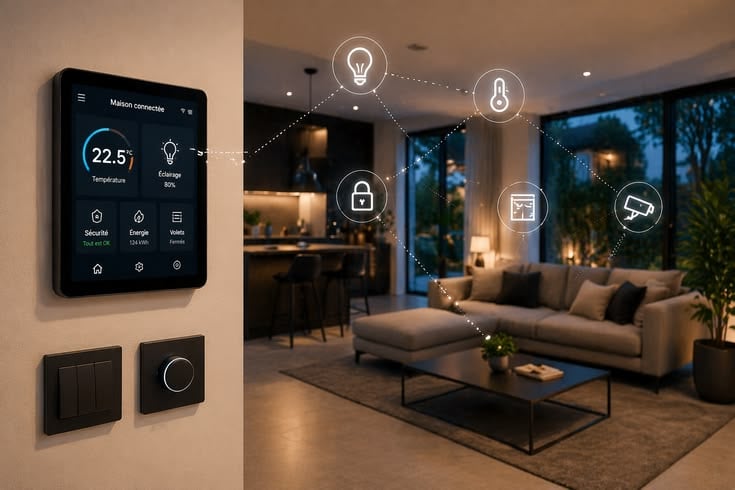
The defining demand of the 2026 luxury smart home buyer is simple and unambiguous: one system that controls everything. Not five apps for five separate systems. Not a different interface for the lights, the thermostat, the security cameras, the audio, and the garage door. One unified platform — and preferably one that does not require daily interaction because the home has already learned to manage itself.
Florida's luxury market analysis from Completely Connected states it directly: 'The first thing luxury buyers want is a single system to control everything. No jumping between apps. No confusion. One system controls the lights, temperature, audio, and security.' MILLION Luxury's January 2026 Miami Beach market report confirms the same: 'Ultra-luxury buyers increasingly favor unified control platforms that bring the major domains together: lighting, HVAC, audiovisual, shading, and security.'
The Professional-Grade Platform Ecosystem
Three professional platforms dominate the luxury residential integration market in 2026. Understanding the differences matters for buyers evaluating a home's smart infrastructure:
Platform | Best For | Strengths | Typical Investment |
Crestron | Ultra-luxury, commercial-grade residential | Maximum customization, scalability, rock-solid reliability | $50K–$500K+ installed |
Control4 | Luxury residential, entertainment-focused | User-friendly, strong AV integration, dealer network | $15K–$100K+ installed |
Lutron | Lighting + shading specialist | Best-in-class lighting control, Ketra circadian integration | $10K–$80K+ installed |
Josh.ai | AI-native voice control layer | Natural language, privacy-first, learns user patterns | Add-on to above platforms |
Savant | Apple-ecosystem luxury homes | Elegant UI, strong Apple HomeKit bridge, lifestyle scenes | $20K–$150K+ installed |
Crestron Home OS 4 — the current generation of the platform — integrates natively with Lutron lighting, Sonos audio, Yale smart locks, 2N video intercoms, biometric readers, and PTZ security cameras through a single dashboard. Control4 offers comparable breadth with a more accessible price point and a larger national dealer network, making it the most common luxury residential choice below the ultra-high-end tier. In Raleigh's custom build market, Control4 is specified in multiple North Ridge Parade of Homes properties, with Crestron appearing in the most technically ambitious installations.
In 2026, the most sophisticated smart homes are not the ones with the most devices — they are the ones where every device talks to every other device through a single system that the homeowner rarely has to consciously operate.
Trend 2: AI-Powered Automation — The Home That Learns
The most significant evolution in luxury smart home technology between 2020 and 2026 is the transition from rule-based automation to machine-learning automation. The 2020 smart home did what you told it to do — turn the lights on at 7pm, set the thermostat to 72 at night. The 2026 smart home learns what you do and does it before you ask.
Josh.ai — described by Florida Realtors as the leading AI-native home control system — is the clearest expression of this shift. It understands natural language and adapts to user behavior over time. As Florida Realtors' February 2025 analysis describes: 'If a homeowner dims the lights at sunset, plays jazz in the evening, and turns on the fireplace, Josh.ai picks up on the pattern and does it automatically.' Critically, Josh.ai is also privacy-focused, keeping data secure locally without selling it to third parties — a distinction that matters deeply to the high-net-worth buyer who understands the data implications of cloud-dependent systems.
AI home automation in 2026 extends beyond voice control. AI-powered home theaters (Control4's current offering) automatically adjust picture and sound quality for the content being played. Smart thermostats equipped with occupancy-learning algorithms can reduce heating and cooling costs by an estimated 10 to 15 percent annually versus manual programming per MILLION Luxury's analysis. Refrigerators with interior cameras track inventory and generate grocery lists. Security systems powered by computer vision distinguish between a delivery driver and an unauthorized person without requiring homeowner input.
What AI Home Automation Actually Looks Like in Practice → Morning scene: AI detects first movement, adjusts thermostat, opens shades to 40%, starts the coffee system — without a single command → Josh.ai learns that the homeowner says 'movie time' and dims all lights, closes motorized shades, powers on the projector, and adjusts audio routing → Security AI distinguishes expected visitors (regular housekeeper, scheduled delivery) from unknown visitors — flags only the latter → Energy AI monitors grid pricing and shifts HVAC cycles to off-peak hours, reducing electricity costs automatically → Arrival scene: geofencing triggers gate opening, garage door, interior lights, and thermostat pre-conditioning when the homeowner's phone is 5 minutes away → Departure scene: all lights off, locks confirmed, alarm armed, thermostat to away mode — triggered automatically when everyone has left |
Trend 3: Invisible Technology — Felt, Not Seen
Perhaps the most important aesthetic principle in 2026 luxury smart home design is invisibility. The buyer who has just specified natural quartzite countertops, custom walnut cabinetry, and a La Cornue range does not want a tablet mounted on the wall, a visible speaker grille interrupting the plaster finish, or a ring of sensors breaking the ceiling plane. Technology in the 2026 luxury home should be felt — not seen.
Signals AV's May 2026 analysis of Los Angeles luxury estates articulates this precisely: 'Homeowners want systems that enhance the home without visually competing with it. This includes hidden audio/video systems, flush-mounted lighting controls, and motorized shading that disappears when not in use. The goal is simple: technology should be felt — not seen.'
- Flush-mounted keypads: Lutron's architectural keypads are specified in finishes that match the surrounding wall paint — effectively disappearing into the surface. The only visible element is a subtle engraved button.
- In-wall and in-ceiling speakers: Sonance, Sonos Architectural, and Klipsch in-ceiling speakers are designed to be painted to match the ceiling — invisible until activated. Whole-home audio that genuinely cannot be located by the eye.
- Concealed control interfaces: Touch panels that recess flush with cabinetry or millwork, emerging only when activated. Motorized panels that cover control interfaces when not in use.
- Integrated rack rooms: All AV equipment, servers, networking hardware, and control processors in a dedicated, climate-controlled equipment room — typically adjacent to a utility space — with zero visible hardware in the living environment.
- Motorized shading integration: Lutron's Sivoia QS motorized shades retract completely into the ceiling pocket when open — no visible hardware, no cassette, no fabric roll. Technology that is architecturally indistinguishable from a standard window.
Trend 4: Advanced Security — Biometric, Comprehensive, Discreet
Security expectations for the luxury buyer in 2026 have moved well beyond a doorbell camera and a monitored alarm. The discerning homeowner managing one or more high-value properties expects a security ecosystem that is comprehensive, institutionally reliable, and — in keeping with the invisible technology principle — architecturally discreet.
Crestron Home OS 4 integrates natively with biometric entry systems, 2N video intercoms, Yale smart locks, and professional PTZ (pan-tilt-zoom) security cameras through a single management dashboard. MILLION Luxury's analysis notes that 'biometric entry is moving beyond keypads toward higher-security modalities' in 2026 luxury developments — fingerprint and facial recognition entry systems are now available in formats that integrate seamlessly into architectural millwork without visible hardware.
The 2026 Luxury Security Stack
- Biometric entry: Fingerprint or facial recognition integrated into door hardware or millwork — no visible keypad, no code to share with staff or guests.
- Video intercom with AI: 2N architectural video intercoms with AI-powered visitor identification — receives and logs deliveries, recognizes regular visitors, alerts homeowners to unknown arrivals.
- Professional PTZ cameras: Exterior and entry cameras with motorized zoom and computer-vision analytics that distinguish people from vehicles from wildlife — reducing false alerts.
- Perimeter detection: Ground-based and aerial sensors that create an invisible perimeter around the property — notifying before, not after, an intrusion.
- Remote monitoring: Professional 24/7 monitoring with cellular backup — independent of internet connectivity, which is the first target of a sophisticated physical intrusion.
- Lock-and-leave automation: Departure scenes that confirm every lock, arm every zone, and send a status report to the owner's phone — eliminating the 'did I lock the door' anxiety that plagues owners of large properties.
- Guest and staff access management: Time-limited access codes for housekeepers, contractors, and guests — access logs that timestamp every entry and exit without requiring physical key management.
Security Insight: What Luxury Buyers in the Triangle Are Requesting ◆ North Ridge estates with golf course frontage have perimeter exposure on multiple sides — perimeter detection and exterior camera coverage are standard requests in new builds ◆ Buyers arriving from coastal markets often request monitored gate systems and vehicle-recognition cameras at the driveway entry ◆ Remote monitoring with cellular backup is non-negotiable for buyers who travel frequently or manage multiple properties ◆ Staff access management — particularly for domestic staff and contractors — is a consistent ask in the $3M+ tier ◆ Whole-home security integration into the primary smart home platform (Control4 or Crestron) so that security is managed alongside lighting and climate — not in a separate app |
Trend 5: Circadian Lighting — Wellness Meets Technology
Lighting control has always been a feature of luxury smart homes. In 2026, it has become a wellness tool. The integration of circadian lighting — light that shifts in color temperature and intensity throughout the day to mirror natural sunlight patterns — is one of the most discussed and most sought-after features in the current luxury market.
Florida Realtors' luxury tech analysis describes the system that anchors this trend: 'Smart circadian lighting like Ketra works with Lutron lighting controls and shades, changing throughout the day to mimic natural sunlight and improve mood and sleep.' Ketra is Lutron's tunable light source — a lamp that can produce any color temperature from warm firelight (1400K) to bright midday daylight (6500K) and any point in between, with smooth, automatic transitions programmed to the homeowner's schedule and geographic latitude.
In the morning, Ketra lighting begins at 2700K warm amber, slowly brightening to 4000K by mid-morning as cortisol cycles naturally peak. Through the afternoon it maintains a cooler, energizing 4000–5000K. In the evening it transitions back to 2700K and below, supporting melatonin production and the natural wind-down toward sleep. The homeowner does not manage these transitions — they happen automatically, invisibly, as part of the home's daily rhythm.
- Circadian lighting impact: Research consistently shows that light exposure aligned with circadian rhythms improves sleep quality, mood, alertness, and long-term health outcomes. For luxury buyers who are also performance-oriented professionals, this is not a trivial amenity.
- Scene-based control: Beyond circadian automation, Lutron-Ketra integration enables instant scene calling — 'movie,' 'dinner party,' 'morning routine,' 'reading' — each with a preset configuration of color temperature, brightness, and shade position that the homeowner calls with a single button press or voice command.
- Integration with motorized shades: Lutron's Sivoia shading system works in concert with the lighting control to manage the overall light environment holistically — not just the artificial sources but the daylight that enters through glazing.
Trend 6: Whole-Home Audio and Home Theater — The Entertainment Ecosystem
The luxury entertainment environment has evolved from a single home theater room into a distributed, whole-home audio and video ecosystem that extends from the media room to the kitchen, the primary suite, the pool terrace, and the garage. In 2026, the expectation is music — the right music, at the right quality, in the right room — that follows the homeowner through the home without a single manual adjustment.
Sonos remains the dominant distributed audio platform for luxury residential, with Sonance and Klipsch architectural speakers for in-wall and in-ceiling applications. The complete system — professional amplification, distributed audio routing via Control4 or Crestron, architectural speakers in every primary space, and Sonos as the source management layer — creates a music experience that competitive consumer audio products cannot approach. High-resolution audio (24-bit, 96kHz or higher, delivered via streaming services like TIDAL) paired with properly specified acoustic treatment and speaker placement produces sound quality that was previously only available in dedicated listening rooms.
The 2026 Luxury Home Theater
The dedicated home theater has evolved into what Signals AV describes as a 'multi-purpose media room' allowing homeowners to switch between cinema, sports viewing, gaming, and social entertainment with a single command. The defining elements of the 2026 luxury home theater are:
- 4K laser projection: Sony, Epson, or JVC 4K laser projectors with 120–150-inch screens. Laser eliminates lamp replacement and delivers consistent brightness over 20,000+ hours of operation.
- Dolby Atmos surround: A minimum 7.1.4 Atmos configuration with in-ceiling height channels that create the three-dimensional sound environment the format was designed for.
- Acoustic treatment integrated into millwork: Fabric wall panels, bass traps, and diffusers designed into the room's architecture — invisible from a decor standpoint, essential from an acoustic one.
- AI-powered calibration: Control4's current home theater processor automatically adjusts picture and sound quality for the content playing — a different calibration for an action film versus a documentary versus a live sports broadcast.
- Motorized recliner seating: Row seating with individual motorized recline, USB charging, and cup holders integrated into custom millwork. The theater functions as a social space, not just a viewing room.
Trend 7: Smart Climate Control — Precision, Learning, and Energy Intelligence
HVAC is the largest energy consumer in any luxury home, and the 2026 smart home buyer expects their climate control system to be as sophisticated as every other system in the house. The standard has moved decisively beyond a smart thermostat to a fully zoned, occupancy-sensing, AI-learning climate management system that delivers precise comfort in every room while minimizing energy consumption.
MILLION Luxury's analysis confirms that smart thermostats and zoned HVAC are among the top five smart home features luxury buyers request: 'Smart thermostats should learn when people are home, adjust automatically, and reduce energy costs. This is not a bonus feature — this is what buyers expect.' The 10 to 15 percent annual energy cost reduction that properly configured smart HVAC delivers is meaningful even at the operating cost scale of a $3M–$6M home.
- Multi-zone control: Separate temperature zones for primary suite, guest rooms, entertainment areas, office, and wine cellar — each with independent scheduling and occupancy sensing.
- Occupancy-based automation: Rooms condition only when occupied or approaching occupancy — significantly reducing the energy cost of maintaining comfort in a large home's unused spaces.
- AI scheduling and grid integration: Systems that read real-time electricity pricing and shift energy-intensive conditioning cycles to off-peak, lower-cost periods without sacrificing comfort.
- Air quality monitoring: VOC sensors, CO2 monitoring, humidity control, and particulate filtering integrated into the HVAC system with real-time reporting to the homeowner's dashboard.
- Integration with the smart home platform: Climate control managed within the same interface as lighting, security, and audio — not in a separate thermostat app. Departure scenes automatically set away temperatures; arrival scenes restore comfort pre-emptively.
Trend 8: Smart Energy Management and Sustainability
The luxury buyer in 2026 is not only concerned with comfort and convenience — they are increasingly concerned with their home's energy footprint, both for environmental and financial reasons. Smart energy management has entered the standard specification for $3M+ builds as a result, with solar, battery storage, EV charging, and whole-home energy monitoring becoming expected rather than exceptional.
- Whole-home energy monitoring: Systems like Sense or Emporia Vue monitor energy consumption at the circuit level — identifying which appliances are consuming most, flagging unusual consumption patterns, and providing real-time visibility into the home's total draw.
- Solar integration: In North Carolina, the combination of strong solar irradiance, NC's state solar incentives, and the Federal Investment Tax Credit makes rooftop solar increasingly attractive for luxury homes. Tesla Solar and SunPower are among the brands specified in custom builds.
- Battery backup: Tesla Powerwall or Generac PWRcell battery systems store solar generation for evening use and provide backup power during grid outages — critical for homes with extensive smart infrastructure that fails without power.
- Whole-home generator: Florida Realtors' luxury tech analysis specifically recommends whole-home generators for high-tech luxury properties: 'Even the smartest home is only as reliable as its power and internet connections. A whole-home generator ensures uninterrupted power during outages.' For North Carolina, where summer storms and ice events can interrupt grid power, a natural gas or propane generator is a standard specification in $3M+ builds.
- EV charging infrastructure: Level 2 (240V, 48A) EV charging in the garage — typically two circuits to accommodate the buyer's vehicle and a guest vehicle. Smart charging systems that schedule charging to off-peak rate hours and integrate with the energy management platform.
Trend 9: Wellness Technology — The Home as Health Sanctuary
Wellness has entered luxury home design as a primary category — not an amenity. In 2026, the expectation among $3M+ buyers increasingly includes technology-enhanced wellness spaces that rival the best private spa and fitness facilities. Scott Miller Real Estate's May 2026 luxury market analysis notes: 'Wellness-centered spaces are no longer considered niche amenities — they are becoming expected in modern luxury homes.'
- Infrared saunas: Sunlighten's infrared sauna systems are among the most specified in 2026 luxury builds — some featuring custom Himalayan pink salt wall accents. Infrared saunas deliver therapeutic heat at lower ambient temperatures than traditional saunas, with documented benefits for cardiovascular health, muscle recovery, and detoxification.
- Steam shower systems: MrSteam and ThermaSol steam generators integrate into a primary suite shower with aromatherapy injection, chromotherapy lighting, and app-based pre-programming. The steam shower has moved from spa amenity to master bath expectation in the $3M+ tier.
- Circadian sleep technology: The Ketra/Lutron circadian lighting system described in Trend 5 has its most impactful application in the primary suite — programming the bedroom environment to support optimal sleep onset, sleep quality, and morning alerting.
- Air purification: Whole-home air purification integrated into the HVAC system — HEPA filtration, UV sterilization, and bipolar ionization — producing indoor air quality measurably superior to the exterior environment.
- Smart fitness spaces: Dedicated home gym spaces with rubber flooring, wall-mounted mirror displays (Mirror by Lululemon, Peloton Guide) for on-demand coaching, and integrated audio, lighting, and climate control that responds to workout intensity.
- Water quality systems: Whole-home water filtration and softening systems with smart monitoring — tracking filter life, water consumption, and water quality metrics from the home's smart platform.
Trend 10: Outdoor Technology — Extending the Smart Home Beyond the Walls
The 2026 luxury home's smart technology does not stop at the exterior wall. Outdoor living has become a year-round priority for luxury buyers — particularly in North Carolina's climate, where a well-designed outdoor space is usable from March through November — and the technology investment in outdoor spaces reflects that priority.
HolliClem's December 2025 analysis of high-tech luxury properties identifies motorized retractable screens as a leading outdoor technology trend: 'Brands like Phantom Screens allow homeowners to effortlessly transform covered porches into bug-free, climate-controlled extensions of the interior at the touch of a button.' Combined with outdoor heating systems (infrared radiant heaters integrated into the ceiling structure, invisible when retracted), automated lighting, and full outdoor audio, the covered porch or terrace becomes a fourth-season living environment.
- Outdoor audio: Sonance or Polk Audio outdoor architectural speakers — landscape-integrated subwoofers that disappear into planting beds, in-ceiling speakers in covered outdoor structures — delivering interior-quality audio in exterior environments.
- Outdoor lighting control: Lutron-controlled landscape, pathway, pool, and architectural lighting — programmed to seasonal schedules, dusk-to-dawn automation, and scene-based control from the same interface as the interior.
- Pool and spa automation: Pentair IntelliCenter or Jandy iAquaLink pool automation — remote temperature control, LED color lighting programs, waterfall and fountain activation, and filter cycle scheduling from a phone or smart home panel.
- Motorized outdoor screens and shades: Phantom or Lutron QS outdoor shades that create privacy, block insects, and reduce wind exposure in covered outdoor spaces — retractable into ceiling pockets when not in use.
- Outdoor kitchen technology: Lynx or Kalamazoo smart grills with app-based temperature monitoring, integrated refrigeration with smart inventory tracking, and outdoor sound and lighting systems that extend the indoor entertainment environment.
Trend 11: Connectivity Infrastructure — The Foundation Everything Runs On
All of the systems described in this guide are only as reliable as the network infrastructure that underlies them. In 2026, the luxury home's connectivity infrastructure is as important as its electrical or plumbing systems — and must be designed with the same level of professional engineering.
MILLION Luxury's January 2026 analysis makes the case for structured wiring directly: 'Hardwired infrastructure supports reliability, performance, and future expansion, especially in large homes with complex systems.' The structured cabling system of a properly designed luxury home includes Cat6A ethernet to every room (wireless is not sufficient for distributed audio, video, and control), a professionally designed WiFi 6E mesh network with access points positioned for full-building coverage without dead zones, and fiber optic backbone cabling in larger estates.
- Redundant internet connectivity: Primary fiber or cable internet plus cellular LTE or Starlink satellite backup — ensuring that the loss of one connection does not take the smart home offline. Florida Realtors specifically recommends Starlink as a backup option for luxury properties in areas with single-ISP coverage.
- Local processing: Properly designed systems (Crestron, Control4, Lutron) process commands locally — meaning the lights, locks, and HVAC function even if internet connectivity is lost. This is the critical distinction between consumer-grade and professional-grade smart home systems.
- Network segmentation: Separate VLANs (virtual local area networks) for smart home devices, personal computing devices, and guest access — ensuring that a compromised IoT device cannot access personal data.
- Dedicated equipment rooms: A climate-controlled AV and network equipment room with rack-mounted infrastructure, UPS battery backup for the core control systems, and remote monitoring capability for the integrator.
- Future-proofing: Conduit pathways and pull strings through the structure during construction for future cable runs — the single cheapest investment that has the highest long-term value in a custom build.
What These Trends Mean for Raleigh's $3M–$6M Market
Raleigh's luxury custom build market — concentrated in North Ridge Country Club, Hayes Barton, and Country Club Hills — is responding to exactly these buyer demands in real-time. The Parade of Homes properties that define the market's design standards have progressively incorporated more sophisticated smart home specifications with each annual cycle.
Control4 whole-home automation has become a near-standard specification in the North Ridge Parade properties delivered by Raleigh Custom Homes, ICG Homes, and Homescapes Builders — linking lighting, audio, security cameras, gate systems, and climate into unified interfaces that buyers can evaluate during the Parade and expect in their own builds. Lutron lighting control and motorized shading are equally standard in the $3M+ tier. The wellness technology category — steam showers, infrared saunas, circadian lighting in the primary suite — has entered the specification conversation meaningfully in 2025 and 2026.
Smart Home Technology in Raleigh's $3M–$6M Market: Current Standards ▶ Control4 or Crestron whole-home automation: Standard in Parade-quality builds and most $3M+ custom specifications ▶ Lutron lighting control with scene programming: Expected across all primary living spaces and exterior ▶ Motorized shade integration (Lutron Sivoia): Standard in primary suite, media rooms, and main living areas ▶ Distributed audio (Sonos + architectural speakers): Expected throughout — including outdoor covered spaces ▶ Professional security cameras and smart locks: Standard; biometric entry appearing in 2026 builds ▶ EV charging infrastructure: Two Level 2 circuits in garage are now a standard buyer expectation ▶ Whole-home generator: Increasingly standard in $3M+ builds given NC's storm and ice event exposure ▶ Smart pool automation: Standard with any pool installation — Pentair IntelliCenter or equivalent ▶ Whole-home air purification: Growing rapidly; now standard in $4M+ builds; optional at $3M tier ▶ Infrared sauna and steam shower: Present in most current Parade properties; buyer expectation in $4M+ tier |
The relocation buyer arriving from a tech-sector background in Silicon Valley, Seattle, or Boston has lived in homes where Crestron or Control4 automation was standard. They are not impressed by it — they expect it. What impresses them is the quality of the integration: whether the system was programmed with intelligence and care, whether the scenes are thoughtfully designed, whether the technology truly disappears into the architecture. A $50,000 Control4 installation that was carelessly programmed and poorly integrated feels worse to this buyer than a $15,000 system that was executed with precision and attention to how the homeowner will actually use the home.
For builders and sellers in Raleigh's luxury market, the implication is clear: smart home investment returns depend entirely on execution quality. A properly integrated, professionally programmed, well-documented system is a marketing asset that influences buyer perception and supports premium pricing. A system with loose wiring, inconsistent scenes, and a complicated interface is a liability that sophisticated buyers will discount. The technology is the foundation. The programming and integration is the product.
The Bottom Line: What 2026 Buyers Want Is Deceptively Simple
Read through every trend in this guide and the pattern is consistent. Luxury buyers in 2026 want their smart home to be invisible, unified, intelligent, and reliable. They want to arrive home to a house that knows they are coming. They want to sleep in a room that prepares itself for rest. They want their security to be comprehensive and their privacy to be protected. They want their entertainment to be effortless and their wellness to be supported by the environment they live in.
None of these wants are complicated. The challenge is delivering them without friction, without visible technology competing with the home's design, and without creating a system so complex that the homeowner needs a manual to use it. That challenge — invisible intelligence, delivered reliably — is what separates the smart home of 2026 from everything that came before it. And it is what the best luxury buyers, arriving at the best properties in North Ridge and Hayes Barton and custom estates across the Triangle, have come to expect as the price of entry.
For Raleigh's builders, sellers, and buyers: the smart home is no longer a feature. It is infrastructure. And like all infrastructure, it rewards the investment made upfront, amortizes invisibly over time, and becomes painfully apparent when it is absent.
The 2026 luxury smart home is not defined by what it can do. It is defined by what it does without being asked — and by how completely it disappears into the life of the people who live inside it.
Sources: Statista (2026) · Digitalholics (Dec 2025) · MILLION Luxury (Jan & Feb 2026) · Florida Realtors/Tech Helpline (Feb 2025) · Completely Connected (Apr 2026) · Signals AV (May 2026) · HolliClem (Dec 2025) · Scott J. Miller RE (May 2026) · Craftmark Homes (Apr 2026) · Braddhesi (Jan 2026) · Wildfire Outdoor Living (2026) · London Bay Homes (Apr 2026) · Yale Appliance (2026) · Crestron / Control4 / Lu
Check out this article next